

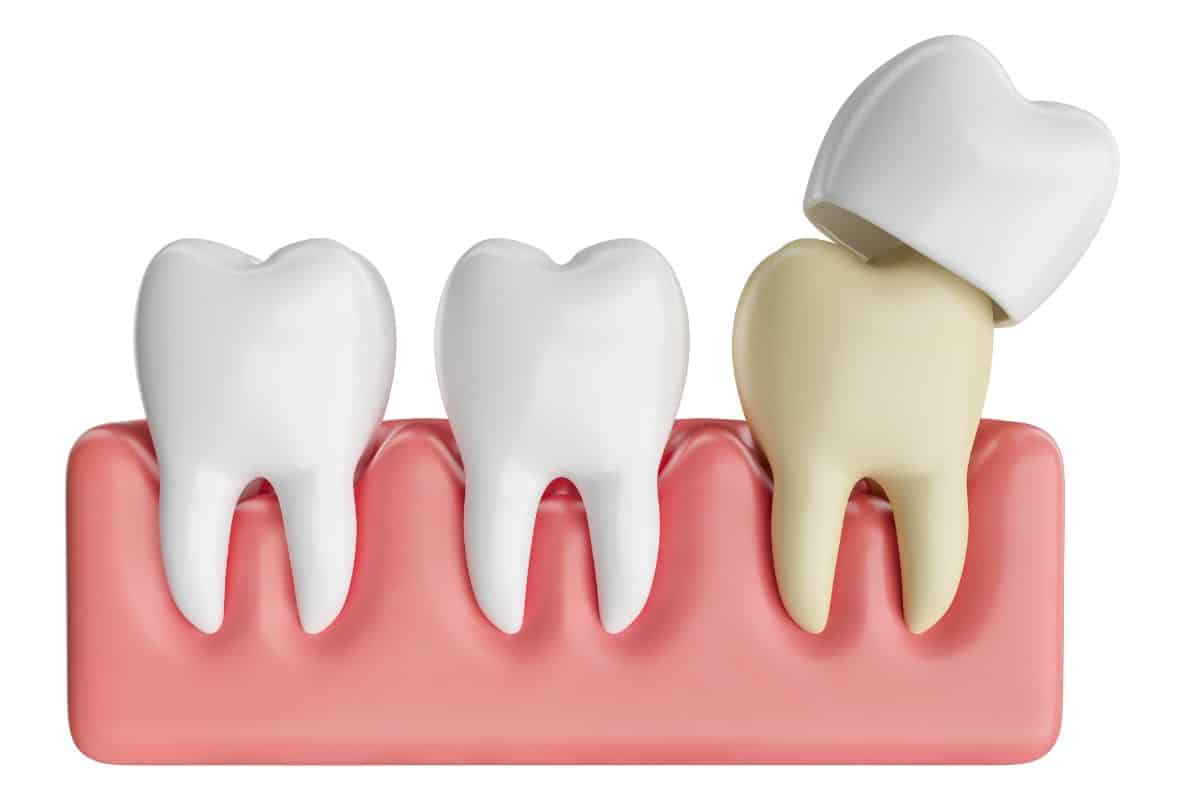
Dental crowns last an average of 10 to 15 years. According to the Cleveland Clinic, most crowns stay functional for 5 to 15 years with proper care. Some materials, like gold and zirconia, can last 20 years or longer. The exact lifespan depends on the crown material, where it sits in your mouth, your oral hygiene routine, and daily habits like teeth grinding.
Crowns are one of the most common dental restorations in the United States. A study published in PubMed found that 95% of crowns survive at least five years in the mouth. That number drops to between 50% and 80% at the 15 to 20 year mark. These numbers show that crowns are a reliable long-term solution, but they do not last forever.
We place dental crowns and bridges every week here in Littleton, CO. Our patients often ask how long their crown will hold up and what they can do to make it last. This post covers everything you need to know.
What a Dental Crown Actually Does
A dental crown is a cap that covers a damaged or weakened tooth. It restores the tooth’s shape, strength, and ability to handle chewing forces. The American Dental Association (ADA) notes that crowns are recommended when a tooth does not have enough structure left to support a large filling.
We use crowns after root canal therapy to protect the treated tooth. Crowns also repair cracked teeth, cover teeth with severe decay, and support dental bridges.
The CDC reports that about 26% of adults aged 20 to 64 have untreated tooth decay. Many of those cases eventually need a crown to restore the tooth and prevent further damage. The sooner a damaged tooth is treated, the better the long-term outcome.
Crown Lifespan by Material Type
The type of material used for your crown has the biggest effect on how long it lasts. Each material has different strengths. Your dentist will recommend the best option based on the tooth’s location and how much force it needs to handle.
Gold and metal alloy crowns are the most durable. Research shows gold crowns have survival rates above 96% at ten years, according to data reviewed in PubMed. Many gold crowns last 20 to 30 years or more. They hold up well on back teeth that take heavy chewing forces.
Zirconia crowns are a newer option made from zirconium dioxide. They are very strong and resist fractures well. Studies in the Journal of Prosthodontics show zirconia crowns have survival rates above 95% after 10 years. Many patients in the South Denver area prefer zirconia for back teeth because of that strength.
Porcelain and all-ceramic crowns look the most like natural teeth. They work best on front teeth where appearance matters most. The ADA notes that ceramic crowns have 5-year survival rates in the range of 90% to 95%. They typically last 10 to 15 years.
Porcelain-fused-to-metal (PFM) crowns combine a metal base with a porcelain outer layer. They offer both strength and a natural look. PFM crowns generally last 10 to 15 years, according to the Cleveland Clinic.
We offer cosmetic restorations and veneers as well, which may be a better fit for teeth that need less coverage than a full crown.
Dental Crown Lifespan Comparison by Material
| Crown Material | Average Lifespan | 5-Year Survival Rate | Best Use |
| Gold / Metal Alloy | 20 to 30+ years | 96%+ | Back teeth (molars) |
| Zirconia | 15 to 25 years | 95%+ | Front and back teeth |
| Porcelain-Fused-to-Metal (PFM) | 10 to 15 years | 90 to 95% | Front and back teeth |
| All-Ceramic / Porcelain | 10 to 15 years | 90 to 95% | Front teeth |
| Composite Resin | 5 to 7 years | 80 to 85% | Temporary or budget option |
Data compiled from the American Dental Association (ADA), Cleveland Clinic, PubMed systematic reviews, and the Journal of Prosthodontics.
What Makes a Crown Wear Out Faster
Several habits and conditions shorten the life of a dental crown. The biggest one is bruxism, which is the medical term for teeth grinding or clenching. A study published in PubMed found that bruxism increases the risk of crown failure by about 1.5 times. Another clinical study showed crown survival dropped from 92% to 80% in patients who grind their teeth and do not wear a night guard.
We fit patients with occlusal guards specifically to protect crowns and natural teeth from grinding damage. An occlusal guard is a small investment that can add years to the life of a crown.
Poor oral hygiene is the other major factor. Decay can form at the margin where the crown meets the gum line. The National Dental Practice-Based Research Network reported a crown remake rate of about 3.8%, and most of those replacements were caused by decay around the edges. Brushing twice a day, flossing daily, and keeping up with dental cleanings prevents this from happening.
Chewing on hard objects like ice, pens, or hard candy puts stress on crowns that they are not built to handle. The same goes for using teeth to open packages or tear tape. These habits cause cracks and chips that lead to early replacement.
Littleton residents who play sports should also consider a custom sports guard to protect crowns and natural teeth during contact activities.
Signs a Crown Needs to Be Replaced
Crowns do not always fail with obvious pain. Sometimes the signs are subtle. Knowing what to look for helps you catch problems early before they get worse.
Visible dark lines at the gum line around a PFM crown can mean the metal base is showing through as gums recede. A crown that feels loose or rocks when you press on it has likely lost its seal. Food getting stuck around a crown more than usual can mean the margins have opened up.
Sensitivity to hot or cold that was not there before may signal decay forming under the crown. Pain when biting down can mean the crown has cracked internally or the tooth underneath has a new problem.
We use digital X-rays during routine exams to check the health of the tooth under the crown. Many issues are caught on X-ray before you feel any symptoms at all.
If you notice any of these signs, schedule an appointment right away. Same-day emergency visits are available at our Littleton office for urgent situations.
How to Make Your Crown Last Longer
Good daily habits make the biggest difference in crown longevity. A long-term follow-up study published in PubMed tracked crowns for up to 50 years. Metal-ceramic crowns in that study had an estimated mean survival of over 47 years. The key factor was annual dental visits and consistent oral hygiene.
Brush your teeth twice a day with fluoride toothpaste. Floss around the crown every day, making sure to clean where the crown meets the gum. An electric toothbrush can help reach tight spots more effectively.
Avoid chewing ice, hard candy, popcorn kernels, and other hard foods directly on the crowned tooth. If you grind your teeth at night, wear a night guard. The ADA recommends regular dental checkups every six months so your dentist can monitor your crown and catch small problems early.
At Southbridge Dentistry, we have been helping South Denver families take care of their teeth since 1982. Our team monitors every crown we place and addresses any concerns quickly.
Colorado’s dry climate can contribute to dry mouth, which reduces saliva flow. Saliva helps protect teeth and crown margins from decay. Staying hydrated is especially important for our Littleton and South Denver patients who spend time at higher altitudes.
When a Crown Cannot Be Saved
Sometimes a crown fails and the tooth underneath is too damaged for a new crown. In these cases, the tooth may need to be removed. The good news is that modern replacement options exist.
Dental implants are the strongest and most permanent option for replacing a missing tooth. An implant replaces both the root and the crown with a restoration that can last a lifetime. For patients missing several teeth, dentures and partial dentures are another option we offer.
The CDC reports that 13.2% of adults aged 65 and older have lost all of their teeth. Keeping crowns in good shape and replacing them on time helps prevent tooth loss and keeps you out of that statistic.
Frequently Asked Questions
How Often Should Dental Crowns Be Replaced?
Dental crowns should be replaced when they show signs of wear, damage, or decay at the margins. There is no set schedule for replacement. Most crowns last 10 to 15 years. The Cleveland Clinic notes that some crowns last longer depending on the material and how well they are maintained. Your dentist will check your crown at each visit and recommend replacement only when needed.
Do Teeth Go Bad Under Crowns?
Teeth can develop decay under crowns if bacteria reach the tooth through gaps at the crown margin. This happens most often when oral hygiene is poor or when the crown’s seal breaks down over time. The National Dental Practice-Based Research Network found that decay at the margin is the leading reason crowns need to be replaced. Regular brushing, flossing, and dental checkups in Littleton help prevent this.
Do Teeth Stay Healthy Under Crowns?
Teeth stay healthy under crowns as long as the crown fits well and the patient maintains good oral hygiene. A properly placed crown seals out bacteria and protects the tooth from further damage. The ADA notes that crowns are one of the most effective ways to preserve a weakened tooth. We check crown fit and margins at every cleaning appointment here in South Denver.
What Happens to Crowns After 10 Years?
Crowns after 10 years may begin to show normal wear. Research published in PubMed shows that 80% to 90% of crowns are still functioning well at the 10-year mark. Some crowns show minor chips, slight loosening, or gum recession around the margins after a decade. These issues are manageable with timely dental care. In many cases, a well-maintained crown continues to function for years beyond the 10-year point.
Why Does It Take 2 Weeks to Make a Crown?
It takes about 2 weeks to make a crown because the crown is custom-fabricated in a dental laboratory. During your first visit, the dentist prepares the tooth and takes a detailed impression or digital scan. That information goes to the lab, where technicians build the crown layer by layer to match your bite and the color of your surrounding teeth. A temporary crown protects the tooth while the permanent one is being made. We place the final crown at your second appointment.
Are Dental Crowns a Big Deal?
Dental crowns are a common and straightforward procedure. The ADA reports that millions of crowns are placed in the United States every year. The process involves numbing the area, reshaping the tooth, and fitting the crown. Most patients experience little to no discomfort. We offer “No Fear” dentistry with sedation options for patients in Littleton who feel anxious about any dental work.
What Is a Good Substitute for a Crown?
A good substitute for a crown depends on how much tooth structure remains. If the damage is small, a large filling or restoration or an onlay may be enough. Onlays cover part of the tooth’s chewing surface without capping the entire tooth. Porcelain veneers can work for front teeth with cosmetic damage. For teeth that are too damaged to save, a dental implant replaces the entire tooth. Your dentist will recommend the best option based on the specific situation.
Where to Go From Here
A dental crown is one of the best ways to protect a damaged tooth and keep your smile working the way it should. Most crowns last 10 to 15 years, and many last even longer with the right care. Brushing, flossing, wearing a night guard if you grind, and seeing your dentist twice a year are the simplest ways to get the most life out of your crown.
We have been placing and maintaining crowns for South Denver families for over 40 years. If you have a crown that feels different, looks worn, or has not been checked in a while, now is a good time to schedule a visit.
Call our Littleton office at 303-798-4967 or request an appointment online to have your crown evaluated.