

Before getting a dental crown, you should know that the process typically takes two visits, involves reshaping the natural tooth to fit the crown, requires a temporary crown between appointments, and results in a restoration that lasts 10 to 15 years on average. According to a review published in the Journal of Prosthetic Dentistry, 95% of dental crowns remain functional for at least five years, and survival rates at 15 to 20 years range from 50% to 80% depending on the material and care. Below, we cover what a dentist does before placing a crown, why it takes two visits, how long the process takes, what to expect afterward, and how to make your crown last as long as possible.
What Does a Dentist Do Before a Crown?
Before a crown, the dentist examines the tooth, takes X-rays to check the root and surrounding bone, removes any decay, and reshapes the tooth so the crown will fit over it securely. If the tooth is severely damaged or the nerve is compromised, a root canal may need to be done first.
At our Littleton, Colorado office, the first visit for a crown follows a clear process. We start by numbing the area with local anesthesia so you feel no pain. Then we remove any existing decay or old filling material and assess how much healthy tooth structure remains. If the tooth is strong enough to support a crown, we reshape it by reducing the outer surfaces by about 1 to 2 millimeters all the way around. This creates space for the crown to sit over the tooth like a cap.
After the tooth is prepared, we take a detailed impression or digital scan of the tooth, which gets sent to a dental lab where the permanent crown is custom-made to match your bite and the color of your other teeth. In the meantime, we place a temporary crown to protect the prepared tooth while you wait. The temporary crown is cemented with a weaker adhesive so it can be removed easily at the second visit.
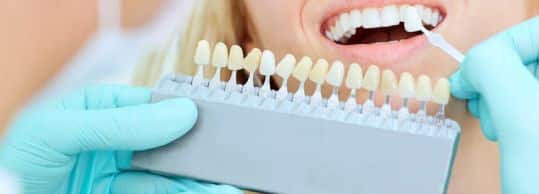
We use tooth-colored composite materials for our crowns and bridges so the restoration looks natural and blends in seamlessly with your smile. The goal is always to restore the tooth’s strength, function, and appearance.
Why Does It Take 2 Weeks to Make a Crown?
It takes about 2 weeks to make a crown because the permanent restoration is custom-fabricated by a dental laboratory. The lab uses the impression or digital scan taken during your first visit to create a crown that precisely matches the shape, size, and color of your natural teeth.
The lab process involves multiple steps: designing the crown, milling or casting the material (whether porcelain, zirconia, or porcelain-fused-to-metal), layering color to match your surrounding teeth, and making fine adjustments to ensure the fit is exact. This level of customization takes time, but it is what makes a lab-fabricated crown more precise and longer-lasting than a one-visit option.
During the two-week wait, your temporary crown protects the prepared tooth. It is important to avoid sticky foods that could pull the temporary off and to chew on the other side of your mouth when possible. If the temporary does come loose, call us right away so we can recement it before the underlying tooth is exposed to bacteria or shifting.
How Long Do Permanent Crowns Take to Put On?
Permanent crowns take about 30 to 60 minutes to put on during the second visit. This appointment is shorter and simpler than the first one.
We start by removing the temporary crown and cleaning the tooth underneath. Then we try in the permanent crown to check the fit, the bite, and the color. If everything looks right, we cement it into place with a strong permanent adhesive. We check your bite one more time to make sure it feels comfortable and even. Minor adjustments can be made on the spot.
Most patients in Littleton are in and out within an hour for this second visit. There is usually no need for anesthesia during the cementation appointment unless the tooth is sensitive. You can eat and drink normally right after, though we recommend waiting about 30 minutes for the cement to fully set.
How Uncomfortable Is Getting a Crown?
Getting a crown is not very uncomfortable. The first visit, where the tooth is reshaped, is done under local anesthesia, so you should feel pressure but no pain. Most patients describe it as similar to getting a filling.
After the anesthesia wears off, you may experience mild soreness or sensitivity around the tooth for a day or two. This is normal and usually manageable with over-the-counter pain relief. The second visit, when the permanent crown is cemented, is typically painless and requires no anesthesia at all.
For patients in the Littleton and South Denver area who have dental anxiety, we offer multiple comfort options. Our office features private treatment rooms with music headphones and flat-screen TVs. We also provide nitrous oxide, conscious sedation, and IV sedation dentistry for patients who need a deeper level of relaxation. No one should avoid getting a crown they need because of fear. We have been helping anxious patients feel comfortable since 1982.
Does a Crown Feel Weird When You First Get It?
Yes, a crown can feel weird when you first get it. It is common to notice a slightly different texture, shape, or bite for the first few days. Your tongue will be drawn to it because it is new, and your bite may feel slightly off until you adjust.
Most patients get used to their new crown within a week or two. However, if the bite still feels high or uneven after a few days, or if you feel pain when biting down, call us. The crown may need a minor adjustment, which takes just a few minutes in the chair. A crown that is too high can cause jaw soreness, headaches, and even damage to the opposing tooth if left uncorrected.
Mild sensitivity to hot and cold is also normal in the first few weeks, especially if the tooth still has a living nerve. This sensitivity typically fades as the tooth settles. If it persists beyond a few weeks, we will evaluate whether additional treatment is needed.
How Long Do Dental Crowns Last?
Dental crowns last an average of 10 to 15 years. With excellent care, many crowns last 20 years or longer. According to a review published in the Journal of Prosthetic Dentistry, about 95% of crowns remain functional at five years, approximately 80% to 85% at ten years, and around 70% at fifteen years.
The lifespan of your crown depends on several factors: the material used, the location in your mouth, your oral hygiene habits, and whether you grind your teeth. A retrospective study published in PMC found that crowns on non-vital teeth (teeth with root canals) had a significantly higher failure rate, with a hazard ratio of nearly 1.9, meaning they fail almost twice as often as crowns on vital teeth. Bruxism was another significant risk factor for failure.
We discuss all of these factors with our patients in Littleton before placing a crown. If you grind your teeth, we will recommend a custom occlusal guard to protect the crown. Regular dental cleanings and exams every six months allow us to monitor the crown and catch any issues early, long before they lead to failure.
Crown Lifespan by Material Type
Crown Material | Average Lifespan | Best For |
All-Porcelain / Ceramic | 10-15 years | Front teeth where appearance matters most |
Zirconia | 15-20+ years | Front or back teeth; strong and natural-looking |
Porcelain-Fused-to-Metal (PFM) | 10-15 years | Back teeth; balance of strength and aesthetics |
Gold / Metal Alloy | 15-30 years | Back molars where durability is the priority |
Sources: Journal of Prosthetic Dentistry; Healthline; American Dental Association (ADA)
Can a Tooth Rot Under a Crown?
Yes, a tooth can rot under a crown. The crown itself cannot decay, but the natural tooth underneath it absolutely can. If bacteria get under the edge of the crown, decay can develop at the margin where the crown meets the tooth, eventually undermining the entire restoration.
This is one of the most common reasons crowns fail. According to multiple clinical studies, decay at the crown margin is a leading cause of crown loss, alongside cement failure and fracture. The risk is higher when oral hygiene is poor, when the crown margins are not sealed precisely, or when gum recession exposes the root surface below the crown edge.
The best defense is thorough daily brushing and flossing, paying extra attention to the gum line around the crown. Regular professional cleanings allow our hygienists to clean around the crown margins and check for early signs of trouble. If we catch decay at the margin early, we can often treat it before the crown needs to be replaced. If we miss it, the decay can spread to the root, potentially requiring a root canal or extraction.
What Comes First, a Crown or Root Canal?
A root canal comes first, then the crown. If the nerve inside the tooth is damaged or infected, the root canal removes the infected tissue and seals the inside of the tooth. After that, a crown is placed over the tooth to protect it from fracture.
A tooth that has had a root canal is more brittle than a vital tooth because the nerve and blood supply have been removed. Without a crown, it is far more likely to crack under normal chewing pressure. According to a retrospective study published in PMC, crowns on root-canal-treated teeth have a higher failure rate than crowns on vital teeth, which makes the quality of the crown even more important in these cases.
Not every crown needs a root canal first. Many crowns are placed on teeth that still have a healthy nerve, such as teeth with large old fillings, cracks, or cosmetic concerns. We evaluate each situation individually at our Littleton practice and only recommend a root canal when it is clinically necessary.
Frequently Asked Questions
When Does a Tooth Need a Crown Instead of a Filling?
A tooth needs a crown instead of a filling when the damage is too extensive for a filling to restore the tooth’s strength. This includes teeth with large cavities that cover more than half the chewing surface, teeth with cracks, teeth that have had root canals, and teeth with old fillings that are breaking down. A filling works well for small to moderate decay, but a crown wraps around the entire tooth and holds it together, preventing further damage.
What Happens to Crowns After 10 Years?
After 10 years, most crowns are still functional. According to clinical data, approximately 80% to 85% of crowns survive at the 10-year mark. However, normal wear, gum recession, and potential decay at the margins can begin to show. That is why regular exams in Littleton are so important. We check every crown at every visit to catch signs of wear or loosening before they become a problem.
Does Insurance Cover Dental Crowns?
Yes, most dental insurance plans cover crowns, typically at 50% to 80% of the cost after your deductible. Coverage often applies when the crown is deemed medically necessary, such as for a cracked tooth, severe decay, or after a root canal. We accept all insurance that allows you to choose your own dentist. For patients without insurance, we offer our Dental Savings Network in Littleton with no yearly maximums and flexible payment through CareCredit.
How Do I Take Care of a Crown?
Take care of a crown the same way you take care of your natural teeth: brush twice a day with fluoride toothpaste, floss daily (especially around the crown margins), and avoid chewing on ice, hard candy, or other hard objects. If you grind your teeth, wear a night guard. Schedule dental cleanings every six months so we can monitor the crown and clean around it professionally.
Can I Get a Crown If I Have Gum Disease?
You may need to treat the gum disease first before getting a crown. Placing a crown on a tooth with active gum disease can lead to poor fit, faster decay at the margins, and premature failure. We evaluate gum health as part of every crown consultation at our Littleton office. If gum disease is present, we will treat it with scaling and root planing first, then move forward with the crown once your gums are healthy and stable.
What If My Crown Falls Off?
If your crown falls off, save it and call us right away. Do not try to glue it back yourself with household adhesives. You can place it back on the tooth temporarily with a small amount of denture adhesive or toothpaste to protect the exposed tooth until you get to our office. We offer same-day emergency dental appointments in Littleton for situations like this.
The Bottom Line
A dental crown is one of the most reliable restorations in dentistry. It protects a weakened tooth, restores your ability to chew and smile with confidence, and can last well over a decade with proper care. According to the Journal of Prosthetic Dentistry, 95% of crowns are still functional at five years, and many last 20 years or more. The key is choosing an experienced dentist, using the right material for your situation, and keeping up with regular exams and cleanings.
If you are in Littleton, Colorado or the South Denver area and your dentist has recommended a crown, or you think you might need one, call Southbridge Dentistry at 303-798-4967 or book online. We have been placing crowns and bridges for families in this community for over 40 years. We take the time to explain every step, answer every question, and make sure the result looks and feels right. Schedule your consultation today.