

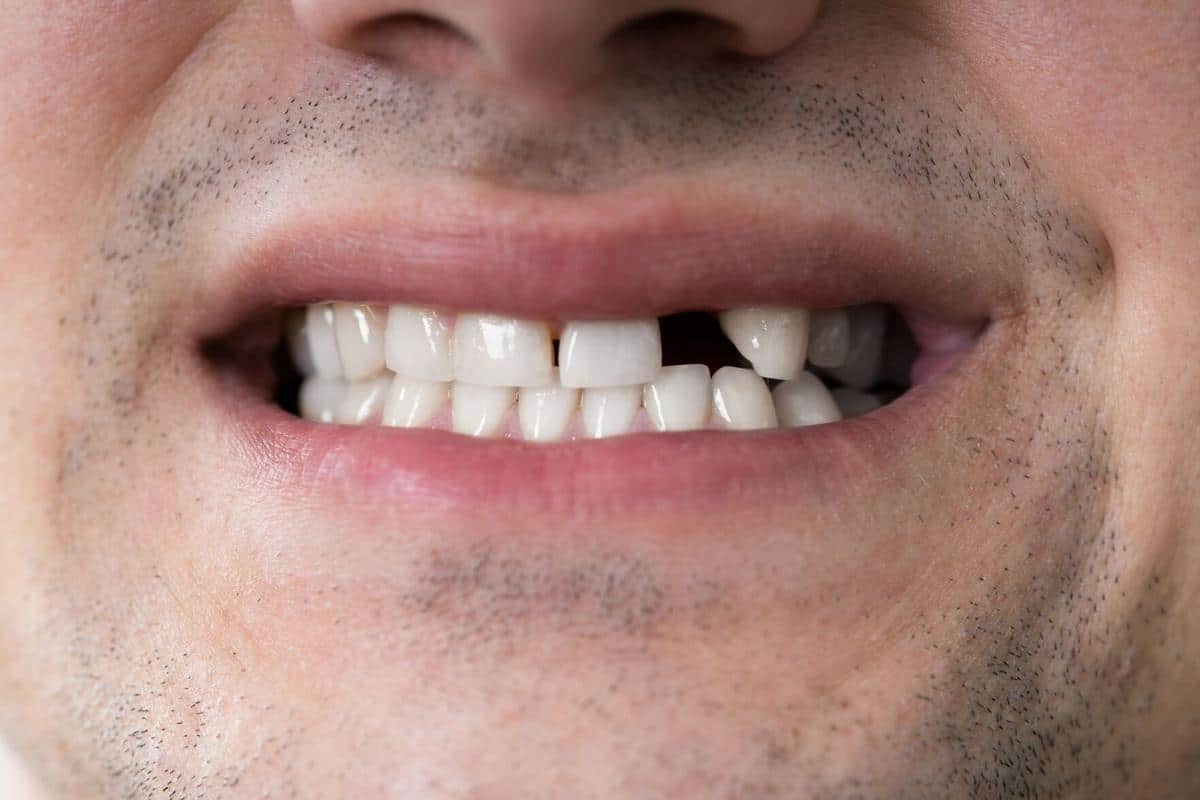
Missing teeth affect oral health by triggering bone loss in the jaw, causing nearby teeth to shift, changing your bite alignment, and raising the risk of further decay and gum disease. Even a single missing tooth sets off a chain of problems that gets worse over time. The American Dental Association (ADA) states that when a tooth is not replaced, surrounding teeth can drift into the gap, and harmful plaque can collect in the new hard-to-reach spaces that form.
The NIDCR reports that adults aged 20 to 64 have an average of 25.5 remaining teeth out of a full set of 32. That means many adults are already living with gaps in their smile. The CDC adds that about 26% of adults aged 65 or older have 8 or fewer teeth remaining, a condition called severe tooth loss. These are not just cosmetic problems. They are health problems that affect chewing, nutrition, speech, and the long-term strength of the jaw.
We see the effects of missing teeth regularly in our Littleton, CO practice. Many patients do not realize how quickly the damage adds up after losing even one tooth. This post explains exactly what happens inside your mouth after tooth loss and what you can do about it.
How Bone Loss Starts After a Tooth Is Gone
The jawbone depends on stimulation from tooth roots to stay dense and strong. Every time you chew, your teeth push force down through the roots and into the bone. That pressure signals the bone to keep rebuilding itself. When a tooth is removed or falls out, that signal stops.
Without stimulation, the bone in that area begins to shrink. This process is called resorption. Research published in PubMed confirms that tooth loss results in irreversible alveolar bone resorption. Some studies show that you can lose up to 25% of bone width in the area below a missing tooth within the first year alone.
We offer bone grafting for patients in Littleton who have already experienced significant bone loss. A bone graft rebuilds the foundation so that future restorations have a solid base to attach to.
The longer a gap stays empty, the more bone is lost. Patients who wait years to replace a tooth often need additional procedures before a restoration can be placed. That is why acting quickly after tooth loss matters so much for long-term oral health.
Teeth Shift When a Gap Is Left Open
Your teeth work as a team. Each tooth supports the ones next to it and the one above or below it. When one tooth is missing, the neighboring teeth lose that support and begin to drift toward the empty space.
The ADA published in the Journal of the American Dental Association (JADA) that when a missing tooth is not replaced, surrounding teeth can shift, creating new gaps where plaque and tartar collect. Over time, this leads to increased risk of tooth decay and periodontal disease in the teeth that were previously healthy.
The tooth directly opposite the gap can also start to move. Upper teeth may begin to drop down into a gap left by a missing lower tooth. This process, called super-eruption, changes how your upper and lower teeth meet when you bite.
We evaluate bite alignment during every new patient exam and at routine checkups. Catching movement early gives us the best chance to prevent bigger problems down the road.
Bite Problems and Jaw Pain From Missing Teeth
Once teeth shift, the way your upper and lower jaws come together changes. This is called malocclusion. A misaligned bite means some teeth take on more force than they were built to handle. Others may not make contact at all.
That uneven pressure can lead to cracked teeth, worn enamel, and chronic jaw pain. It can also cause or worsen temporomandibular joint disorder (TMD), which affects the hinge joints on either side of your jaw. Symptoms include clicking, popping, headaches, and pain when opening your mouth.
We treat TMD and jaw joint disorders here in our South Denver office. In many cases, the bite problems that cause TMD can be traced back to untreated tooth loss that allowed teeth to move out of position over months or years.
The ADA notes that when a tooth is missing, the biting force on remaining teeth begins to change, and the jaw compensates in ways that create extra pressure and discomfort in the jaw joints.
How Missing Teeth Affect Nutrition and Digestion
Chewing is the first step in digestion. When teeth are missing, chewing becomes less effective. Food is swallowed in larger pieces, which puts more strain on the stomach and digestive system.
A systematic review published in PubMed found that individuals with missing teeth change their food preferences and swallow coarser particles to compensate for poor chewing. These changes lead to dietary imbalances and nutritional deficiencies over time. Many people with missing teeth avoid harder foods like raw vegetables, nuts, and lean meats, which are some of the most nutrient-dense foods available.
The CDC reports that severe tooth loss, defined as having 8 or fewer remaining teeth, significantly impacts a person’s ability to eat a healthy diet. One quarter of adults aged 65 or older fall into this category.
Regular dental hygiene visits help us monitor not just your gum health but your overall ability to chew and eat comfortably. If a missing tooth is affecting how you eat, we will discuss replacement options with you.
The Connection Between Tooth Loss and Gum Disease
Periodontal disease and tooth loss feed into each other. Gum disease is the most common cause of tooth loss in adults, according to the NIDCR. And once a tooth is lost, the resulting shift in surrounding teeth creates new pockets and gaps where bacteria thrive, raising the risk of more gum disease.
The ADA reports that roughly 42% of adults aged 30 and older in the United States have some form of periodontitis. Nearly half of adults over 30 are dealing with gum infection that, if left untreated, destroys the tissue and bone that hold teeth in place.
NIH MedlinePlus identifies gum disease as the most common cause of tooth loss and notes that the infection breaks down gum tissue, bone, and connective tissue over time. Teeth eventually become loose and may need to be removed.
This is why we treat gum health as a top priority at Southbridge Dentistry. Preventing and managing periodontal disease is one of the most effective ways to keep your natural teeth for life.
Health Risks Beyond the Mouth
Tooth loss is connected to broader health problems. A study published in PubMed using NHANES data tracked over 8,700 U.S. adults and found a direct association between the number of missing teeth and all-cause mortality risk. Adults who had lost all 28 teeth had a measurably higher risk of death over the 14-year follow-up period compared to those who kept all their teeth.
The CDC also found that lack of functional dentition, meaning fewer than 20 teeth, was more than 50% more prevalent among adults reporting heart disease, emphysema, or rheumatoid arthritis.
Ongoing oral infections and chronic inflammation from untreated gum disease and missing teeth place constant strain on the immune system. This may contribute to systemic inflammation that affects overall health. While tooth loss alone does not cause heart disease or diabetes, the research consistently shows that poor oral health and these chronic conditions travel together.
We recommend that every patient in the Littleton area maintain at least two dental visits per year. Oral cancer screenings are part of our routine exams, adding another layer of protection for your overall health.
Replacement Options Comparison
| Replacement Option | Preserves Jawbone | Prevents Shifting | Average Lifespan | Best For |
| Dental Implant | Yes | Yes | 25+ years (often lifetime) | Single or multiple missing teeth |
| Fixed Bridge | No | Yes | 10 to 15 years | 1 to 3 adjacent missing teeth |
| Partial Denture | No | Partial | 5 to 10 years | Multiple missing teeth, various locations |
| Full Denture | No | N/A | 5 to 8 years | Complete tooth loss |
| All-on-4 Implants | Yes | Yes | 20+ years | Full arch replacement |
Data compiled from the American Dental Association (ADA), Cleveland Clinic, and the American Academy of Implant Dentistry (AAID).
Why Dental Implants Are the Strongest Option
Dental implants are the only tooth replacement that preserves jawbone. The titanium post acts like an artificial root, transmitting chewing forces into the bone and keeping it stimulated. This stops resorption and maintains the shape of your jaw over time.
We place dental implants for patients across Littleton and South Denver. An implant looks, feels, and functions like a natural tooth. It does not require grinding down healthy neighboring teeth the way a bridge does.
For patients missing most or all of their teeth, All-on-4 implant-supported restorations provide a full arch of teeth anchored by just four implants per jaw. This approach gives patients fixed, non-removable teeth with the bone-preserving benefits of implants.
After the implant is placed and heals, a custom implant restoration is attached on top. The result is a permanent replacement that can last decades with proper care.
Frequently Asked Questions
What Disease Causes Loss of Teeth?
The disease that causes the most tooth loss in adults is periodontal disease, also known as gum disease. The NIDCR identifies it as the most common cause of tooth loss among adults in the United States. Periodontitis destroys the gum tissue and bone that hold teeth in place. The ADA reports that roughly 42% of adults aged 30 and older have some form of this disease. Untreated cavities are another major cause. The CDC notes that about 26% of adults aged 20 to 64 have untreated tooth decay that, if ignored, can eventually lead to tooth loss.
What Causes Teeth to Suddenly Fall Out?
Teeth suddenly fall out when advanced gum disease or severe decay has weakened the supporting bone and tissue to the point of failure. In most cases, the damage has been building for months or years before the tooth actually loosens. Trauma from a sports injury or accident can also knock a tooth out with no warning. If you lose a tooth suddenly, contact our Littleton office right away. Same-day emergency appointments are available so we can assess the damage and discuss your options immediately.
What Causes Teeth Bone Loss?
Teeth bone loss is caused by the absence of stimulation that tooth roots normally provide to the jawbone. When a tooth is removed or lost, the bone in that area stops receiving chewing forces and begins to shrink through a process called resorption. PubMed research confirms that this resorption is irreversible without intervention. Periodontal disease also attacks jawbone directly by destroying the tissue and bone around infected teeth. Conditions like osteoporosis can make bone loss worse, especially in postmenopausal women.
How Do Cavities Affect Overall Health?
Cavities affect overall health by creating a source of chronic bacterial infection in the mouth. The CDC reports that untreated cavities can cause pain, abscesses, and infections that may spread to other parts of the body. In rare cases, the results can be serious. Untreated oral infections also contribute to systemic inflammation, which research has linked to conditions like heart disease and diabetes. The CDC found that about 1 in 5 adults aged 20 to 64 have at least one untreated cavity, making this a widespread public health concern.
I Lost a Tooth, What Are My Options?
Your options after losing a tooth include dental implants, fixed bridges, and removable partial dentures. Implants are the strongest and most permanent option because they replace the root and the visible tooth while preserving jawbone. Bridges anchor an artificial tooth to the teeth on either side of the gap. Partial dentures are removable and work well when multiple teeth are missing in different areas. The best choice depends on the location of the missing tooth, the health of your surrounding teeth and bone, and your overall goals. We evaluate all of these factors during a consultation at our South Denver office.
What Happens if You Do Not Replace a Missing Tooth?
If you do not replace a missing tooth, the bone underneath begins to shrink, neighboring teeth shift toward the gap, your bite changes, and your risk of decay and gum disease increases. The ADA confirms that shifting teeth create new spaces where plaque and tartar accumulate. Over time, this can lead to additional tooth loss. Jawbone resorption also changes the shape of your face, making you look older. The longer you wait to replace a missing tooth, the more complex and involved the restoration becomes.
Your Next Step
Missing teeth do far more damage than most people expect. Bone loss, shifting, bite problems, nutritional decline, and increased disease risk all start with a single empty space in your mouth. The good news is that every one of these problems is preventable or treatable when addressed early.
We have been helping Littleton and South Denver families protect their oral health for over 40 years. Whether you lost a tooth recently or have been living with gaps for a while, we can evaluate your situation and lay out a clear path forward.
If you feel nervous about dental visits, we offer IV sedation dentistry and a full “No Fear” approach to make sure you are comfortable from start to finish.
Call our office at 303-798-4967 or request an appointment online to get started.