

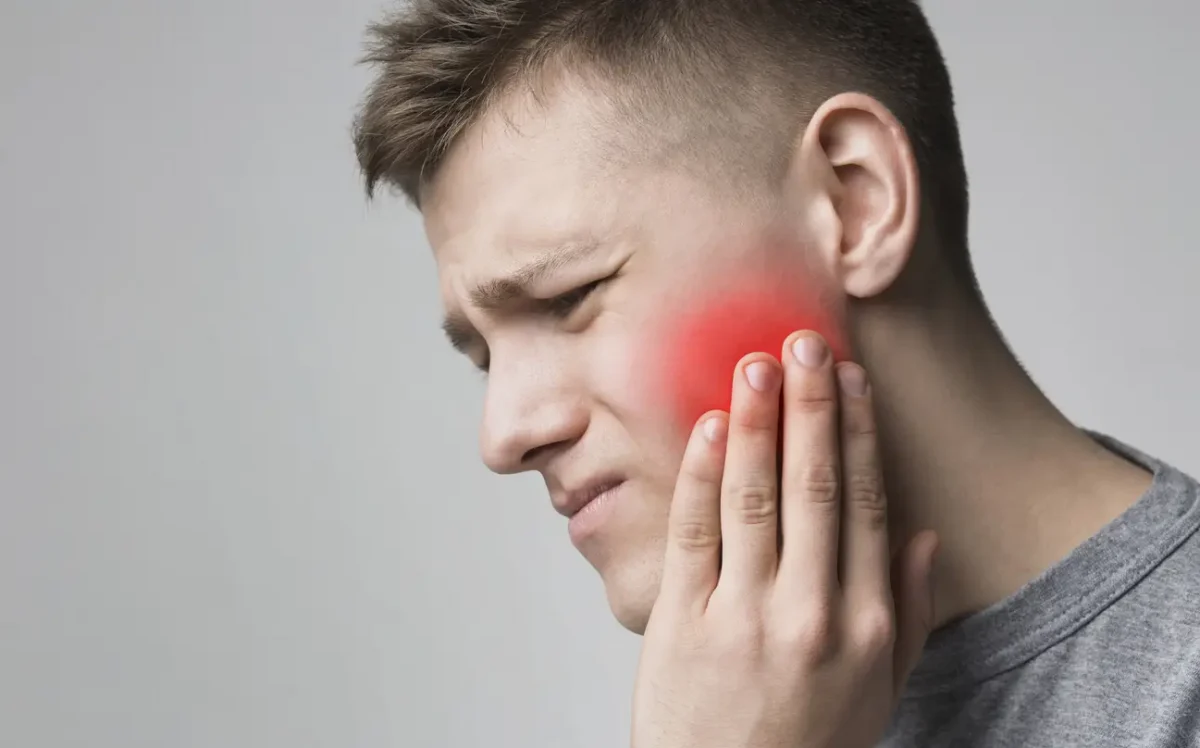
TMJ jaw pain is caused by disc displacement inside the temporomandibular joint, teeth grinding (bruxism), stress-related muscle tension in the jaw, arthritis affecting the joint surfaces, and direct trauma or injury to the jaw. The National Institute of Dental and Craniofacial Research (NIDCR) reports that temporomandibular disorders (TMDs) affect approximately 11 to 12 million adults in the United States, making TMD the second most common musculoskeletal pain condition after chronic low back pain. Most TMJ pain develops from a combination of factors rather than a single cause, which is why identifying the specific triggers affecting your jaw is the first step toward relief. This article explains the anatomy behind TMJ pain, walks through the most common and less obvious causes, describes what the symptoms feel like, and covers how TMJ disorders are diagnosed and treated.
What Is TMJ Disorder and What Causes It
TMJ disorder (TMD) is a group of more than 30 conditions that cause pain and dysfunction in the temporomandibular joint and the muscles that control jaw movement. The temporomandibular joint connects your lower jaw (mandible) to the temporal bone of your skull, with one joint on each side of your face directly in front of each ear. These two joints work as a paired system, guided by a cartilage disc that sits between the bones and cushions every bite, yawn, and word you speak. When any component of this system is injured, inflamed, or misaligned, the result is the jaw pain, clicking, and restricted movement that characterize TMD.
The NIDCR classifies TMDs into three main categories. The first category is joint disorders, which include disc displacement and degenerative joint disease inside the TMJ itself. The second category is muscle disorders, which involve pain and dysfunction in the masticatory muscles that power chewing, clenching, and jaw movement. The third category is TMD-associated headaches, where pain from the jaw joint or muscles radiates into the head and mimics tension headaches or migraines. A person can have conditions from one category or multiple categories at the same time, which is why TMD care often requires a comprehensive evaluation rather than a single test.
Research from the NIDCR emphasizes that there is rarely one single cause behind TMJ pain. A combination of genetic predisposition, physical stress on the joint, psychological factors, and pain sensitivity determines whether a person develops TMD and whether it becomes chronic. Importantly, the NIDCR states that research does not support the long-held belief that a bad bite or orthodontic braces cause TMJ disorders.
What Is the Most Common Cause of TMJ Pain
The most common cause of TMJ pain is a combination of muscle strain in the masticatory muscles and displacement of the articular disc inside the temporomandibular joint. A study by Tallents et al., cited in Medscape’s clinical review, found that disc displacement was present in 84% of patients with symptomatic TMJ compared to only 33% of asymptomatic individuals. The disc, which normally sits between the condyle (the rounded end of the mandible) and the temporal bone, can slip forward or sideways under repetitive strain. When the disc moves out of position, the bones lose their cushion, and the joint produces the clicking, popping, and pain that most TMJ patients recognize.
Muscle-based TMD develops when the muscles responsible for chewing, clenching, and stabilizing the jaw become overworked, fatigued, or locked in sustained contraction. A case-control study published in the National Library of Medicine found that stress perception nearly doubled the odds of developing myofascial TMD (odds ratio of 1.98). The masticatory muscles include the masseter, temporalis, and medial and lateral pterygoid muscles. When these muscles remain tense for extended periods, they develop trigger points that produce a dull, aching pain in the jaw, face, and temples.
Beyond muscle and disc problems, the broader list of TMJ pain causes includes:
- Teeth grinding or clenching (bruxism), which generates up to 250 pounds of force per square inch on the TMJ according to Johns Hopkins Medicine
- Jaw injury from a blow, fall, or whiplash-type impact
- Osteoarthritis or inflammatory arthritis affecting the joint surfaces
- Bite misalignment (malocclusion) that places uneven stress on the joints
- Habitual behaviors like chewing ice, biting nails, or holding a phone between the ear and shoulder
- Forward head posture that shifts the mandible backward and strains the TMJ ligaments
- Hormonal influences, particularly estrogen, which may explain why women are twice as likely to develop TMD
Can Bruxism Cause TMJ Disorder
Yes, bruxism can cause TMJ disorder because the repetitive force of grinding and clenching compresses the articular disc, strains the ligaments, and fatigues the muscles that support the jaw joint. The American Dental Association (ADA) reported in 2021 that over 70% of surveyed dentists saw increased TMJ disorder symptoms among their patients, with bruxism identified as a primary contributor. The connection between bruxism and TMD is mechanical: every grinding episode pushes the condyle into the disc with force that far exceeds normal chewing loads. Over months and years, this repetitive compression thins the disc, shifts it out of position, and creates the clicking and pain that define a TMJ disorder. Regular dental cleaning appointments give your dentist the opportunity to spot the early wear patterns that bruxism leaves on tooth enamel before TMJ symptoms develop.
Does Stress Cause TMJ Pain
Yes, stress causes TMJ pain because psychological tension activates the sympathetic nervous system, which increases muscle tone in the jaw, neck, and shoulders. The jaw muscles respond to stress by clenching, even when you are not eating or speaking. This sustained low-level contraction, called parafunctional muscle activity, keeps the masticatory muscles in a state of chronic fatigue that produces pain, stiffness, and tenderness. The OPPERA (Orofacial Pain: Prospective Evaluation and Risk Assessment) study, the largest prospective longitudinal study of TMD ever conducted, identified psychological distress as one of the strongest predictors of first-onset TMD among adults aged 18 to 44. Patients in the OPPERA study’s most severe cluster reported the highest levels of psychological distress, the most pain, and the greatest number of overlapping chronic pain conditions.
What Autoimmune Disease Is Associated With TMJ
The autoimmune diseases most commonly associated with TMJ disorders are rheumatoid arthritis (RA), psoriatic arthritis, and systemic lupus erythematosus (SLE). Rheumatoid arthritis attacks the synovial lining of joints throughout the body, including the temporomandibular joint. When RA targets the TMJ, the immune system’s inflammatory response erodes the cartilage and bone surfaces inside the joint, producing pain, swelling, stiffness, and progressive loss of jaw function. Juvenile idiopathic arthritis can also affect the TMJ in children and adolescents, sometimes causing growth disturbances in the mandible if left untreated. Ehlers-Danlos syndrome, a connective tissue disorder, increases TMJ hypermobility and makes the joint prone to subluxation (partial dislocation), which leads to chronic instability and pain.
Where Does Your Jaw Hurt With TMJ
Your jaw hurts with TMJ directly in front of the ear on one or both sides of the face, because that is where the temporomandibular joint sits beneath the skin. TMJ pain often radiates outward from the joint into the temples, cheeks, lower jaw, and neck. Many patients describe a dull, aching soreness that worsens with chewing, yawning, or extended talking. The pain may feel concentrated at a single point near the ear, or it may spread across the entire side of the face depending on whether the problem originates in the joint itself or in the surrounding muscles.
Referred pain from TMD frequently mimics other conditions. TMJ-related muscle tension in the temporalis muscle produces headache pain at the temples that patients often attribute to stress headaches. Tension in the lateral pterygoid muscle, which sits deep behind the cheekbone, can refer pain into the ear canal, leading patients to visit their primary care physician for a suspected ear infection. Neck and shoulder pain from TMD develops when the muscles of the jaw and neck share nerve pathways through the trigeminal and cervical nerve networks, causing pain to travel between the two areas.
What Does TMJ Clicking Mean
TMJ clicking means that the articular disc inside the temporomandibular joint has shifted out of its normal position and is snapping back into place as you open or close your mouth. The click occurs at the moment the condyle slides over the displaced edge of the disc. The NIDCR notes that clicking and popping sounds in the TMJ without accompanying pain are common in the general population and are considered normal. Clicking becomes a clinical concern when it is accompanied by pain, limited opening, or locking. Progressive disc displacement can convert painless clicking into a locked jaw, where the disc remains permanently displaced and blocks the condyle from translating forward during opening. A dental exam that includes range-of-motion testing and joint palpation can determine whether your clicking requires treatment or simply monitoring.
What Is a Red Flag for Jaw Pain
A red flag for jaw pain is any symptom that suggests the pain originates from something more serious than a typical TMJ disorder. Red flags include sudden inability to open or close your mouth, severe swelling on one side of the face, numbness or tingling in the jaw or lip, jaw pain accompanied by fever, and jaw pain that radiates down your arm or into your chest. A locked jaw that does not release within a few seconds may indicate severe disc displacement or a dislocated condyle that requires immediate attention. Numbness in the lower lip or chin can signal pressure on the inferior alveolar nerve from a cyst, tumor, or fracture. Jaw pain combined with chest pressure, shortness of breath, or arm pain warrants emergency medical evaluation because these symptoms can indicate a cardiac event rather than a dental condition.
Jaw pain that appears suddenly after a fall, blow to the face, or motor vehicle accident should be evaluated promptly, because fractures of the mandibular condyle are among the most common facial fractures and can destabilize the TMJ permanently if they heal improperly.
What Could Be Mistaken for TMJ
Several conditions produce jaw-area pain that could be mistaken for TMJ disorder, because the symptoms overlap significantly. Accurate diagnosis matters because treating a non-TMD condition as TMJ wastes time and delays the correct intervention.
| Condition | Symptoms That Mimic TMJ | Key Difference From TMJ |
|---|---|---|
| Ear infection (otitis media) | Ear pain, fullness, muffled hearing | Pain originates inside the ear canal, often with fever or drainage |
| Trigeminal neuralgia | Sharp, shooting facial pain near the jaw | Pain is electric and brief (seconds), triggered by light touch to the face |
| Sinus infection (sinusitis) | Upper jaw pain, pressure around the cheeks | Pain worsens when bending forward; nasal congestion and discharge present |
| Tooth abscess | Throbbing jaw pain, swelling, sensitivity | Pain is localized to a specific tooth; responds to dental treatment |
| Tension headache | Bilateral head pressure, temple pain | No clicking or locking in the jaw; pain does not change with jaw movement |
| Salivary gland infection | Swelling near the jaw angle, pain with eating | Swelling is below the jaw, not in front of the ear; worsens with meals |
Sources: Cleveland Clinic (TMD symptom overlap); NIDCR (TMD diagnostic challenges); Medscape (TMJ syndrome differential diagnosis)
Why Did My TMJ Suddenly Get Worse
Your TMJ suddenly got worse because one or more triggering factors increased the load on your jaw joint or muscles beyond their capacity to recover. TMJ disorders are stress-sensitive conditions, meaning they flare during periods of heightened physical or emotional strain. Common triggers for sudden TMJ worsening include a spike in psychological stress (which intensifies clenching), starting a new medication that causes jaw tension (particularly SSRIs), a change in sleep position that places pressure on the affected joint, a dental procedure that required prolonged mouth opening, or a sudden increase in caffeine or alcohol intake.
Posture changes can also trigger flare-ups. Spending long hours at a desk with your head jutting forward shifts the mandible backward and compresses the posterior attachment of the TMJ disc. This forward head posture increases the resting tension in the masticatory muscles and accelerates disc displacement. Seasonal allergies and sinus congestion can add to the pressure by inflaming the tissues around the upper jaw and ear, creating a compounding effect that makes existing TMJ symptoms feel significantly worse. Research published in population-wide studies indicates that 50-75% of people report at least one sign of TMD during their lifetime, and flare-ups tend to cycle with life stressors.
Can TMJ Deteriorate Your Jaw
Yes, TMJ disorder can deteriorate your jaw because chronic inflammation and mechanical overload inside the temporomandibular joint erode the cartilage, remodel the bone, and weaken the structures that hold the joint together. Research published in the National Library of Medicine found that approximately 25-55% of TMD patients show degenerative changes in the TMJ on imaging. Degenerative joint disease (DJD) in the TMJ follows the same pattern as osteoarthritis in other joints: the cartilage wears thin, the underlying bone develops rough patches and spurs, and the joint loses its smooth range of motion.
Progressive TMJ deterioration can affect the teeth as well. As the condyle remodels and the bite shifts, uneven forces distribute across the dental arches. Teeth on the affected side may crack, chip, or wear faster than teeth on the opposite side. Dental crowns can restore teeth that have been damaged by the altered bite forces TMD produces.
Severe, long-standing TMJ deterioration can lead to enough bone loss that teeth become mobile and require extraction. When tooth loss occurs from TMD-related damage, dental implants replace the missing teeth and restore proper chewing function.
Catching TMJ degeneration early through regular exams and imaging is the most effective way to prevent these cascading consequences. Dental restorations also help stabilize the bite and protect weakened teeth from further fracture.
How Is TMJ Disorder Diagnosed
TMJ disorder is diagnosed through a combination of clinical examination, patient history, and imaging studies. There is no single definitive test for TMD, according to the NIDCR, because the more than 30 conditions that fall under the TMD umbrella produce overlapping symptoms. Your dentist or physician will begin by asking about the location, timing, and intensity of your pain, along with any history of jaw injury, bruxism, stress, or related conditions. The physical exam involves checking how wide you can open your mouth (normal opening is 40-55 millimeters), palpating the joint and surrounding muscles for tenderness, and listening for clicking, popping, or crepitus (a grinding sound that signals bone-on-bone contact).
Imaging may include dental X-rays to evaluate the bone structure, a panoramic radiograph to view both joints simultaneously, CT scans for detailed bone assessment, or MRI when disc displacement or soft tissue damage is suspected. MRI is the gold standard for visualizing the position and condition of the articular disc. The OPPERA study demonstrated that TMD incidence runs at approximately 4% per year among 18-44 year olds, which means early and accurate diagnosis has a meaningful impact on preventing the transition from acute to chronic TMD.
What Is the 3 Finger Test for TMJ
The 3 finger test for TMJ is a simple self-screening method where you stack your index, middle, and ring fingers vertically and attempt to fit all three fingers between your upper and lower front teeth when your mouth is fully open. A healthy jaw opening accommodates three stacked fingers comfortably, which corresponds to roughly 40 millimeters or more. If you cannot fit three fingers, or if the attempt produces sharp pain in front of your ears, your jaw opening may be restricted by muscle tightness, disc displacement, or joint inflammation. The 3 finger test is a quick at-home check, not a clinical diagnosis. It tells you whether your range of motion has decreased, which is a signal to schedule a professional evaluation. We see patients in our Littleton, Colorado office who first noticed their TMJ limitation through this simple self-check.
How Do You Fix Jaw Pain From TMJ
You fix jaw pain from TMJ through a step-by-step treatment approach that starts with the least invasive options and escalates only if symptoms persist. Cleveland Clinic and the NIDCR both recommend beginning with conservative, reversible treatments because approximately 40% of TMD cases resolve on their own, and most patients respond well to non-surgical care.
The standard treatment progression for TMJ jaw pain is:
- Self-care: apply moist heat or cold packs to the jaw for 10-15 minutes at a time, eat soft foods, avoid wide yawning, and practice conscious jaw relaxation throughout the day
- Over-the-counter pain relief: anti-inflammatory medications like ibuprofen reduce swelling and muscle pain during flare-ups
- Custom nightguard or occlusal splint: a professionally fabricated occlusal guard worn during sleep absorbs grinding forces and prevents tooth-to-tooth contact that strains the TMJ
- Physical therapy: jaw stretching exercises, manual therapy, and postural correction help restore normal range of motion and reduce muscle tension
- Trigger point injections or Botox: for severe muscle-based TMD, targeted injections relax the overworked masticatory muscles and break the clenching cycle
- Arthrocentesis: a minimally invasive procedure that flushes the joint space with sterile fluid to remove inflammatory debris and restore disc mobility
- Surgery: reserved for structural problems like severe disc displacement, ankylosis (joint fusion), or condylar fractures that do not respond to conservative approaches
TMJ treatment at our practice begins with a thorough evaluation of your bite, joint function, and muscle condition so that we can match the right intervention to your specific situation.
Athletes who clench during competition may also benefit from custom sports guards designed to absorb impact and reduce TMJ strain during play.
What Calms Down TMJ Pain
What calms down TMJ pain most quickly is a combination of moist heat applied to the jaw for 10-15 minutes, gentle jaw stretching exercises, over-the-counter anti-inflammatory medication, and conscious effort to keep the teeth slightly apart throughout the day. The resting position of the jaw should be lips together, teeth apart, with the tongue resting lightly on the roof of the mouth. This “lips together, teeth apart” posture reduces the baseline tension in the masticatory muscles and allows the TMJ to decompress. Patients who feel anxious about dental visits can take advantage of our no-fear dentistry approach, where comfort is the priority at every step of evaluation and treatment.
What Is the Best Sleeping Position for TMJ
The best sleeping position for TMJ is on your back with a supportive pillow that keeps your head, neck, and spine in neutral alignment. Back sleeping distributes weight evenly across both sides of the jaw and prevents the pillow from pushing the mandible sideways. Side sleeping on the affected side compresses the TMJ against the pillow and can worsen clicking, pain, and disc displacement. Stomach sleeping is the worst position for TMJ because it forces the head to rotate to one side, which twists the jaw joint and keeps the neck muscles in a shortened, asymmetric position for hours. For patients who need extensive restorative work to repair TMJ-related dental damage, sedation dentistry allows us to complete longer procedures in fewer visits while keeping you comfortable.
Can TMJ Go Away on Its Own
Yes, TMJ can go away on its own in mild cases. Research cited by Scrivani et al. estimates that approximately 40% of patients with TMD signs and symptoms experience spontaneous resolution without professional treatment. Mild TMJ pain triggered by a temporary stressor, such as a stressful week at work or a single incident of prolonged mouth opening during a dental procedure, often resolves within days to weeks once the triggering factor passes. The NIDCR notes that TMDs frequently last only a short time and go away on their own.
Chronic TMJ pain, however, does not typically resolve without intervention. Patients whose symptoms persist beyond three months, who experience progressive locking or loss of jaw opening, or who develop degenerative changes visible on imaging need professional management to prevent further joint damage. The NIDCR classifies TMD among conditions that peak between ages 20 and 40, and Cleveland Clinic data confirms that women are twice as likely as men to develop TMD. Patients in these higher-risk groups benefit from early evaluation even when symptoms seem mild, because catching disc displacement or degenerative changes early allows for conservative treatment before oral surgery becomes necessary.
Frequently Asked Questions
What Age Is TMJ Most Common
TMJ disorder is most common between the ages of 20 and 40, which is unusual for a chronic pain condition because most musculoskeletal pain conditions increase with age. The NIDCR and Cleveland Clinic both confirm this age range as the peak period for TMD onset. Women in this age bracket are disproportionately affected, with TMD occurring at rates at least twice as high as in men. Researchers continue to study whether hormonal factors, particularly estrogen’s role in joint inflammation, contribute to this gender disparity.
Is It Better to Go to a Doctor or Dentist for TMJ
It is generally better to see a dentist first for TMJ pain, because dentists are trained to evaluate jaw joint function, bite alignment, tooth wear patterns, and the masticatory muscles that drive most TMD symptoms. Your dentist can fabricate a custom nightguard, identify bruxism-related damage, and refer you to specialists when needed. If your TMJ pain involves systemic conditions like rheumatoid arthritis, sleep apnea, or neurological symptoms, your dentist may coordinate care with your physician or a specialist such as an oral surgeon, rheumatologist, or physical therapist.
What Are the First Signs of TMJ Nerve Damage
The first signs of TMJ nerve damage include numbness or tingling in the lower lip, chin, or tongue, a burning sensation along the jawline, and sharp, shooting pain that travels from the jaw to the ear or temple. These symptoms suggest that inflammation or structural changes inside the TMJ are putting pressure on branches of the trigeminal nerve, which supplies sensation to the face and jaw. Nerve-related TMJ symptoms require prompt evaluation because early treatment can relieve the pressure before permanent nerve damage occurs.
Can TMJ Cause Ear Pain
Yes, TMJ can cause ear pain because the temporomandibular joint sits directly in front of the ear canal, and inflammation or muscle tension in the TMJ area radiates pain into the ear. This referred ear pain from TMD is one of the most common reasons patients visit their primary care physician for a suspected ear infection only to find no infection present. The proximity of the TMJ to the auditory structures also explains why some TMD patients experience tinnitus (ringing in the ears) and a sensation of ear fullness alongside their jaw symptoms.
Does TMJ Affect Both Sides of the Jaw
TMJ disorder can affect one side or both sides of the jaw, depending on the cause and location of the problem. Unilateral TMD (one side) is more common when the cause is a localized disc displacement, a jaw injury, or habitual chewing on one side. Bilateral TMD (both sides) is more common when the cause is systemic, such as rheumatoid arthritis, widespread bruxism, or chronic stress that tenses both masticatory muscle groups equally. Some patients start with symptoms on one side and develop bilateral involvement over time as the unaffected joint compensates for the dysfunction on the other side.
How Does Your Face Feel With TMJ
Your face feels heavy, tight, and fatigued with TMJ disorder, particularly around the cheeks, temples, and the area just in front of the ears. Many patients describe a constant dull ache across the lower half of the face that worsens with chewing or talking. The temples may feel tender to the touch from temporalis muscle tension, and the cheeks may feel swollen or stiff from masseter muscle strain. Some patients notice facial asymmetry, where one side of the jaw appears more prominent or swollen than the other due to uneven muscle hypertrophy from clenching. TMD-related facial symptoms often peak in the morning after a night of sleep bruxism and gradually ease throughout the day.
The Bottom Line
TMJ jaw pain rarely comes from a single cause. The temporomandibular joint sits at the intersection of your bite, your muscles, your stress levels, and your overall joint health, which means the triggers for TMD are just as varied as the people it affects. The encouraging reality is that most TMJ pain responds well to conservative treatment, and roughly 40% of cases resolve on their own. The key is not ignoring the early signals. Clicking that becomes painful, soreness that lingers past a few days, or a jaw that does not open as far as it used to are all signs that your TMJ needs attention before the problem compounds.
Our team at Southbridge Dentistry has the diagnostic tools and treatment experience to evaluate your jaw, identify what is driving the pain, and build a plan that brings you relief. Call us at 303.798.4967 to schedule your visit.