

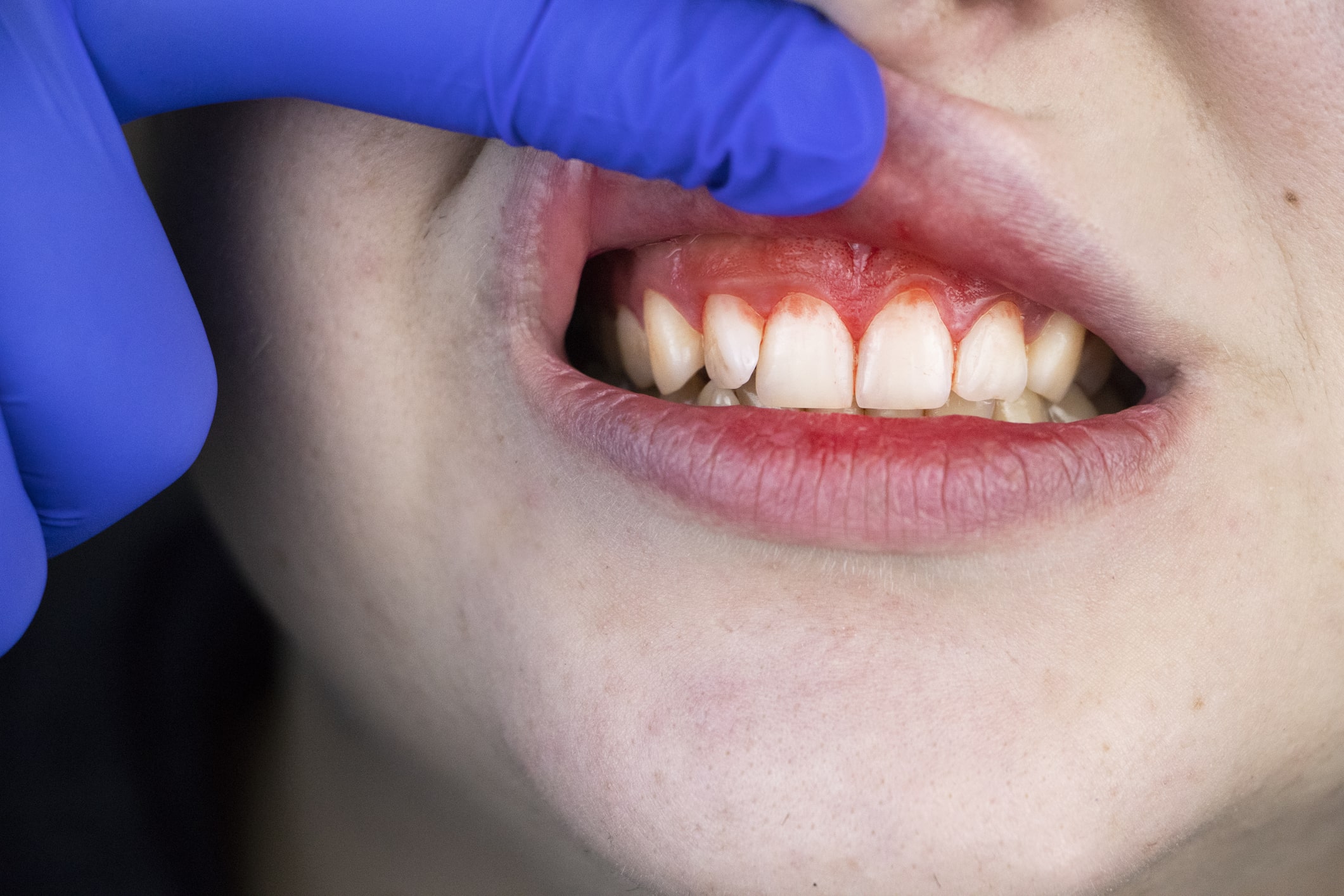
The early signs of gum disease include bleeding gums when you brush or floss, red or swollen gum tissue along the gumline, persistent bad breath that does not go away with brushing, and gum recession that makes your teeth look longer than they used to. These symptoms often show up without any pain, which is why gum disease catches so many people off guard. According to the Centers for Disease Control and Prevention (CDC), 47.2% of adults aged 30 and older in the United States have some form of periodontal disease. Catching the warning signs early gives you the best chance of reversing the damage before it reaches your bone and supporting tissues. This article walks through what gum disease looks like in its earliest stages, what causes it, how it progresses, what happens when it goes untreated, and exactly what you can do to prevent and treat it.
What Is Gum Disease and Why Does It Start
Gum disease is an infection of the tissues that surround and support your teeth, and it starts when bacterial plaque collects along and below your gumline. Clinically known as periodontal disease, gum disease begins with plaque, a soft sticky film made of bacteria and food particles. Plaque that is not removed through daily brushing and flossing can harden into tartar (calculus) in as little as 24 to 72 hours. Tartar bonds firmly to tooth enamel and cannot be removed by a toothbrush or floss alone. Only a professional dental cleaning can remove hardened tartar deposits from the tooth surface.
Tartar buildup below the gumline creates an environment where bacteria thrive and multiply. These bacteria release toxins that irritate gum tissue and trigger an inflammatory response from your immune system. The inflammation that results from this bacterial invasion is what we recognize as gum disease. The World Health Organization (WHO) reports that severe gum disease affects approximately 1 billion people worldwide, making periodontal disease one of the most common chronic conditions on the planet.
Gum disease develops on a spectrum. The mildest form is gingivitis, where inflammation stays limited to the soft gum tissue. Gingivitis that goes untreated can advance into periodontitis, a more serious condition that damages the bone and connective tissue holding your teeth in place. The transition from gingivitis to periodontitis is not always obvious, because the early stages of gum disease rarely produce pain. This silent progression is what makes knowing the warning signs so important.
What Does Stage 1 Gum Disease Look Like
Stage 1 gum disease looks like red, puffy gum tissue along the gumline that bleeds easily during brushing or flossing. Healthy gums are pale pink, firm, and fit snugly around each tooth. When gum disease begins, those same gums shift to a darker red or even purplish color, become soft and swollen, and may feel tender to the touch. A study published in the Journal of Clinical Periodontology found that gum tissue affected by gingivitis is characterized by swelling, redness, a shiny surface, and bleeding upon gentle probing. Many patients in our Littleton, Colorado office tell us they noticed their toothbrush coming away pink before they noticed any other changes.
The visible changes in gum color and texture are your body’s inflammatory response to bacteria gathering at the gumline. Inflamed gum tissue swells because blood flow to the area increases as your immune system sends white blood cells to fight the infection. This increased blood flow is also what causes the bleeding. Bleeding gums during routine brushing or flossing is not normal and should never be dismissed as “just brushing too hard.”
A practical self-check you can do at home involves looking at your gums in a mirror under good lighting. Compare the tissue along your front teeth to the tissue around your back molars. Gum disease often starts unevenly, so one area may appear redder or puffier than others. Press a fingertip gently along the gumline. Healthy tissue feels firm and does not bleed from light pressure. Tissue that is spongy, tender, or bleeds from gentle contact likely has some degree of inflammation.
Why Do Gums Bleed When Brushing
Gums bleed when brushing because inflamed gum tissue contains more blood vessels near the surface than healthy tissue does. When plaque bacteria accumulate along the gumline, the body responds by increasing blood flow to the area to deliver immune cells. This extra blood supply makes the gum tissue fragile and prone to rupturing under even gentle pressure from a toothbrush. The American Academy of Periodontology notes that bleeding is one of the earliest and most reliable indicators that gum disease has started.
A common misconception is that bleeding gums mean you should stop brushing or flossing the area. The opposite is true. Consistent gentle brushing and daily flossing help remove the bacterial plaque that is causing the inflammation. For most people who start a disciplined brushing and flossing routine, bleeding from gingivitis typically subsides within one to two weeks as inflammation decreases. Bleeding that persists beyond two weeks, even with improved home care, signals that a professional evaluation is needed.
Does Gum Disease Cause Bad Breath
Yes, gum disease causes bad breath because bacteria trapped in gum pockets and along the gumline release sulfur compounds as they break down food particles and dead tissue. This type of bad breath, clinically called halitosis, does not resolve with mouthwash or breath mints because the bacteria producing the odor live below the gumline where topical rinses cannot reach. Persistent bad breath that does not improve with regular brushing, flossing, and tongue cleaning is a warning sign that gum disease may be developing beneath the surface.
Bad breath from gum disease differs from ordinary morning breath or garlic-related odor because it returns quickly after brushing and tends to carry a stale or metallic quality. The deeper the gum pockets become, the more bacteria accumulate, and the stronger the odor grows. Addressing the underlying infection through professional treatment is the only reliable way to eliminate gum-disease-related bad breath.
What Is the Difference Between Gingivitis and Periodontitis
The difference between gingivitis and periodontitis is that gingivitis affects only the soft gum tissue and is fully reversible, while periodontitis involves irreversible damage to the bone and connective tissue that support your teeth. Gingivitis is the body’s inflammatory response to plaque bacteria at the gumline, and it can be completely reversed with improved oral hygiene and professional cleaning. Periodontitis develops when that inflammation spreads below the gumline and begins destroying the periodontal ligament and alveolar bone that anchor teeth in the jaw.
The CDC reports that gingivitis is reversible with proper brushing, flossing, and professional care, but periodontitis, once established, can only be managed and slowed. The bone loss that occurs during periodontitis does not regenerate on its own. This distinction is critical because it defines the window of opportunity for treatment. Catching gum disease during the gingivitis stage means we can bring your gums back to full health. Once periodontitis sets in, the goal shifts from reversal to damage control. Cosmetic restorations may eventually be needed for teeth that have suffered visible gum recession from advanced disease.
Pocket depth is the clinical measurement that distinguishes the two conditions. Healthy gum pockets measure 1 to 3 millimeters deep. Gingivitis may cause slight swelling but typically does not increase pocket depth beyond the normal range. When pockets measure 4 millimeters or deeper, attachment loss has begun, and the condition is classified as periodontitis. Your dentist measures these pockets during routine exams using a small probe that slides gently between each tooth and the surrounding gum tissue.
What Are the Stages of Gum Disease
The stages of gum disease are gingivitis, Stage I (early) periodontitis, Stage II (moderate) periodontitis, and Stage III (advanced) periodontitis. Each stage represents a deeper level of tissue destruction and a narrower window for reversing damage. The National Institute of Dental and Craniofacial Research (NIDCR) reports that 42.2% of U.S. adults aged 30 and older have total periodontitis, consisting of 7.8% with severe disease and 34.4% with nonsevere disease. The table below breaks down the clinical markers at each stage.
| Stage | Pocket Depth | Bone Loss | Reversibility | Key Symptoms |
|---|---|---|---|---|
| Gingivitis | 1-3 mm (normal range) | None | Fully reversible | Red, swollen gums; bleeding when brushing; bad breath |
| Stage I (Early Periodontitis) | 4 mm or less | Less than 15% | Not reversible; progression can be stopped | Gum recession begins; slight tooth sensitivity |
| Stage II (Moderate Periodontitis) | 4-5 mm | 15-33% | Not reversible; progression can be slowed | Noticeable recession; teeth may appear longer; increased sensitivity |
| Stage III (Advanced Periodontitis) | 6 mm or deeper | 50% or more | Not reversible; tooth loss likely without intervention | Loose or shifting teeth; pus between teeth and gums; pain when chewing |
Sources: CDC/American Academy of Periodontology (AAP) case definitions for surveillance; National Institute of Dental and Craniofacial Research (NIDCR) periodontal disease data
The progression from gingivitis through the stages of periodontitis is not always linear. Some patients stay in the gingivitis stage for years without advancing, especially with consistent home care. Other patients, particularly those with risk factors like smoking or diabetes, can progress through the stages more quickly. Advanced periodontitis, where more than 50% of supporting bone has been lost, often results in teeth becoming loose enough to require tooth extraction. Early detection through regular dental exams remains the single most effective way to catch gum disease before it reaches the later stages.
What Causes Gum Disease
Gum disease is caused primarily by bacterial plaque that accumulates on teeth when daily oral hygiene is inconsistent. Plaque contains more than 700 species of bacteria, and when these bacteria are left undisturbed, they organize into a biofilm that produces toxins irritating to gum tissue. The toxins trigger inflammation, and the resulting immune response, while intended to fight the infection, also damages the surrounding tissue. Poor oral hygiene is the most common cause, but several other risk factors significantly increase a person’s likelihood of developing gum disease.
Risk factors that increase susceptibility to gum disease include:
- Tobacco use, including cigarettes, cigars, pipes, and smokeless tobacco
- Diabetes (both Type 1 and Type 2), which impairs the body’s ability to fight infection
- Hormonal changes during pregnancy, puberty, menstruation, and menopause
- Medications that reduce saliva flow, including certain antihypertensives, antihistamines, and antidepressants
- Genetic predisposition, which can make some individuals more susceptible regardless of hygiene habits
- Chronic stress, which weakens immune function and slows healing
- Nutritional deficiencies, particularly in vitamin C, which supports gum tissue integrity
Certain medications go beyond reducing saliva. Drugs such as phenytoin (an anti-seizure medication), cyclosporine (an immunosuppressant), and some calcium channel blockers used for blood pressure can cause gingival overgrowth, a condition where gum tissue grows excessively and creates deep pockets that trap bacteria. Patients taking these medications need more frequent professional cleanings and closer monitoring of their gum health.
Does Smoking Cause Gum Disease
Yes, smoking causes gum disease by restricting blood flow to the gums, suppressing the immune response, and creating conditions that favor the growth of harmful bacteria. The CDC reports that smokers are twice as likely to develop periodontal disease as non-smokers. Research published in Dentistry IQ found that more than half of all chronic periodontitis cases in the United States, approximately 8.1 million cases, are attributable to cigarette smoking. Smoking also masks early warning signs because nicotine constricts blood vessels in gum tissue, which reduces visible bleeding even when infection is present.
The damage from smoking is dose-dependent. The more cigarettes a person smokes per day and the more years they smoke, the greater the risk and severity of periodontal disease. Smokers typically develop deeper gum pockets, experience faster bone loss, and respond less favorably to periodontal treatment compared to non-smokers. The encouraging finding is that smoking cessation begins restoring normal blood flow to gum tissue within 24 hours, and noticeable improvements in gum health typically appear within 2 to 12 weeks of quitting.
How Do Hormones and Pregnancy Affect Gum Health
Hormonal changes during pregnancy significantly increase the risk of gum disease because elevated levels of estrogen and progesterone amplify the body’s inflammatory response to plaque bacteria. The CDC and the American Dental Association (ADA) report that 60% to 75% of pregnant women develop gingivitis. Pregnancy dental care is especially important because these hormonal shifts increase blood flow to gum tissue, making gums more sensitive to plaque and more prone to swelling and bleeding.
Pregnancy gingivitis typically appears during the second trimester and may worsen through the third trimester. A 2024 study cited by the ADA found that pregnant women with periodontitis are up to 60% more likely to deliver prematurely and up to 70% more likely to have babies with low birth weight. The connection involves bacteria from infected gums entering the bloodstream and potentially triggering the release of prostaglandins, natural chemicals that can stimulate uterine contractions. Maintaining consistent oral hygiene and scheduling a professional cleaning during pregnancy helps reduce this risk.
Can Gum Disease Be Reversed
Gum disease can be reversed when it is caught in the gingivitis stage, before bone loss has occurred. Gingivitis responds well to a combination of improved home care, meaning thorough brushing twice daily and flossing once daily, along with a professional cleaning to remove tartar that has hardened below the gumline. Most patients with gingivitis see significant improvement within two to four weeks of consistent care.
Once gum disease advances to periodontitis, the condition is no longer reversible because lost bone and connective tissue do not regenerate naturally. Periodontitis can, however, be managed and its progression slowed or halted through professional treatment. The primary treatment for early to moderate periodontitis is scaling and root planing (SRP), a non-surgical deep cleaning procedure. During scaling, a dental hygienist uses specialized instruments to remove plaque and tartar from below the gumline. Root planing smooths the root surfaces of the teeth to discourage further bacterial attachment and to help gum tissue reattach to the tooth.
Scaling and root planing typically requires two appointments, with one side of the mouth treated per visit. Local anesthesia numbs the area during the procedure, and most patients report only mild tenderness for a few days afterward. Research shows that SRP reduces pocket depth by an average of 1 to 2 millimeters in treated areas, which significantly lowers the bacterial load and inflammation. Patients who follow up with regular maintenance cleanings every three to four months after SRP have the best long-term outcomes for keeping periodontitis from progressing further.
What Happens If Periodontal Disease Is Left Untreated
If periodontal disease is left untreated, it progressively destroys the bone and connective tissue that hold your teeth in place, eventually leading to tooth loosening and tooth loss. The bacteria-driven infection spreads deeper into the gum pockets over time, and the body’s own immune response accelerates bone destruction in its attempt to contain the infection. A study from the Global Burden of Disease project found that severe periodontitis results in an estimated $54 billion in annual productivity loss worldwide, reflecting the scale of disability and missed work caused by advanced gum disease complications.
Tooth loss from untreated periodontitis creates a cascade of additional problems. Missing teeth allow neighboring teeth to shift out of alignment, which changes the bite and can lead to jaw pain. The jawbone in the area of a lost tooth begins to shrink because it no longer receives stimulation from a tooth root. This bone resorption can eventually make it difficult to place dental implants because the jaw may lack the density needed to support a titanium post.
In those situations, bone grafting is often necessary to rebuild the lost bone structure before an implant can be placed. The CDC data shows that 70.1% of adults aged 65 and older have periodontal disease, and the rate of tooth loss in this age group remains disproportionately high because many cases went untreated for decades.
Can Gum Disease Cause Tooth Loss
Yes, gum disease can cause tooth loss because advanced periodontitis destroys the alveolar bone that anchors tooth roots in the jaw. As bone loss progresses past 50%, teeth lose their structural foundation and become mobile. Periodontitis is the leading cause of tooth loss in adults worldwide, according to the WHO. The Global Burden of Disease Study documented 1.07 billion cases of periodontal disease globally in 2021, with severe cases resulting in widespread edentulism (complete tooth loss) among older populations. Teeth that become loose from periodontitis cannot be stabilized by brushing and flossing alone. Professional intervention, including deep cleaning, surgery, or extraction followed by replacement with implants or dentures, becomes necessary. Infections that spread from deeply pocketed teeth can also affect adjacent teeth and may require root canal treatment to save neighboring structures.
How Does Gum Disease Affect Overall Health
Gum disease affects overall health because bacteria and inflammatory molecules from infected gum tissue can enter the bloodstream and contribute to chronic inflammation throughout the body. Research from the National Health and Nutrition Examination Survey (NHANES) found that individuals with periodontitis had a 25% increased risk of coronary heart disease compared to those with minimal gum disease, even after adjusting for confounding factors like smoking, blood pressure, and cholesterol. The mechanism involves periodontal bacteria entering the bloodstream through ulcerated gum pockets, where they can attach to fatty plaques in arteries and accelerate the development of atherosclerosis.
The relationship between periodontitis and diabetes is bidirectional. Diabetes impairs immune function and reduces blood flow to the gums, making diabetic patients more susceptible to gum infections. At the same time, the chronic inflammation from periodontitis makes it harder for diabetic patients to control blood sugar levels. A 2025 review published in the National Library of Medicine confirmed that periodontal disease affects approximately 50% of adults worldwide and shares overlapping inflammatory pathways with both diabetes and cardiovascular disease. This interconnected relationship means that treating gum disease can improve systemic health outcomes, and managing systemic conditions like diabetes can improve gum health.
Additional systemic connections documented in peer-reviewed research include associations between periodontitis and respiratory infections, rheumatoid arthritis, and adverse pregnancy outcomes. The bacteria Porphyromonas gingivalis, one of the primary pathogens in periodontal disease, has been detected in atherosclerotic plaques, amniotic fluid, and even brain tissue in Alzheimer’s disease research. While these associations do not prove that gum disease directly causes these systemic conditions, they demonstrate that oral health and whole-body health are deeply connected.
How Can I Prevent Gum Disease
You can prevent gum disease by maintaining a consistent daily oral hygiene routine, attending regular professional cleanings, and managing known risk factors. Prevention focuses on disrupting plaque before it hardens into tartar and before bacteria have the opportunity to colonize below the gumline. The University of Iowa College of Dentistry reports that brushing alone cleans only about 60% of tooth surfaces, which means the remaining 40%, the areas between teeth and under the gumline, depend entirely on flossing or interdental cleaning for plaque removal.
Here is a step-by-step approach to preventing gum disease:
- Brush your teeth at least twice a day for a full two minutes each time, using a soft-bristled toothbrush held at a 45-degree angle to the gumline
- Floss once every day, preferably before bedtime, curving the floss into a C-shape around each tooth and sliding it gently below the gumline
- Replace your toothbrush every three to four months, or sooner if the bristles appear frayed
- Schedule a professional hygiene visit every three to six months, depending on your individual risk level
- If you smoke, work toward quitting, because tobacco use doubles your risk of periodontal disease according to CDC data
- Manage chronic conditions like diabetes that compromise immune function and increase gum disease susceptibility
- Eat a balanced diet rich in vitamin C, calcium, and leafy greens, all of which support healthy gum tissue
We recommend that patients who have a family history of gum disease or who take medications causing dry mouth come in for cleanings more frequently than the standard six-month interval. A dental exam includes pocket measurements around every tooth, which gives us baseline data to track changes in your gum health over time.
Healthy habits should start early in life. Pediatric dentistry plays an important role in gum disease prevention, because teaching children proper brushing and flossing techniques helps prevent gum problems from ever starting. Building these routines early means a lifetime of stronger gum health.
How Is Gum Disease Treated
Gum disease is treated based on the stage and severity of the condition, ranging from professional cleanings for gingivitis to surgical procedures for advanced periodontitis. The goal of every treatment approach is to reduce bacterial load, decrease pocket depth, and create conditions that allow gum tissue to heal and reattach to the tooth surface.
For gingivitis, treatment typically involves a professional prophylaxis (cleaning) to remove plaque and tartar above and below the gumline, followed by patient education on improved home care techniques. Most gingivitis cases resolve fully within a few weeks of treatment.
For Stage I and Stage II periodontitis, scaling and root planing remains the standard first-line treatment. This non-surgical deep cleaning targets the bacterial deposits and rough root surfaces that perpetuate the infection. After SRP, patients enter a maintenance schedule with cleanings every three to four months to prevent relapse.
For Stage III (advanced) periodontitis, surgical intervention may be necessary. Procedures include flap surgery, where the gums are lifted back to remove deep tartar deposits and then sutured tightly around the teeth to reduce pocket depth. In cases of significant bone loss, bone grafting procedures rebuild the lost structure to support remaining teeth or prepare the jaw for dental implant placement. Patients who feel anxious about these procedures can take comfort in our no-fear dentistry approach, which prioritizes comfort at every step.
Regardless of the treatment stage, long-term success depends on the patient’s commitment to daily home care and regular follow-up visits. Research consistently shows that patients who attend maintenance cleanings on schedule after periodontal treatment have significantly better outcomes than those who skip appointments. Treatment halts the progression of the disease, but only consistent daily care prevents it from returning.
Frequently Asked Questions
Can I Live With Periodontitis
Yes, you can live with periodontitis, but the condition requires ongoing professional management and disciplined daily care to prevent it from worsening. Periodontitis is a chronic condition, similar to diabetes or hypertension, that can be controlled but not cured once bone loss has occurred. Patients who follow a structured maintenance schedule with cleanings every three to four months and who practice thorough home care can keep periodontitis stable for many years and retain their natural teeth.
Is Gum Disease Contagious
Gum disease itself is not contagious in the way a cold or flu spreads, but the bacteria that cause gum disease can be transmitted between people through saliva. Sharing utensils, kissing, and other saliva-exchanging activities can transfer periodontal bacteria from one person to another. However, the presence of these bacteria alone does not guarantee that gum disease will develop. A person’s individual immune response, oral hygiene habits, and risk factors determine whether transmitted bacteria lead to infection.
How Long Does It Take for Gingivitis to Turn Into Periodontitis
Gingivitis can take weeks, months, or even years to progress into periodontitis, depending on individual risk factors and the level of plaque accumulation. There is no fixed timeline because the rate of progression varies significantly from person to person. Smokers, diabetics, and individuals with genetic susceptibility tend to progress faster. Some people maintain stable gingivitis for years without it advancing, while others with aggressive risk profiles can develop early periodontitis within months of initial gingivitis symptoms.
How Many 70 Year Olds Still Have All Their Teeth
Relatively few 70 year olds still have all of their natural teeth. CDC data shows that 70.1% of adults aged 65 and older have some form of periodontal disease, and approximately 25% of U.S. adults over age 60 have lost all of their teeth. The rate of complete tooth retention at age 70 remains low, though it has improved in recent decades as dental care has become more accessible. Maintaining regular dental visits and treating gum disease early are the two most effective strategies for keeping your natural teeth throughout your lifetime.
Can Gum Disease Come Back After Treatment
Yes, gum disease can come back after treatment, because the bacteria that cause periodontal disease are always present in the mouth. Treatment reduces the bacterial load and repairs damage, but it does not create permanent immunity. Patients who skip maintenance cleanings, fall behind on daily brushing and flossing, or resume smoking after treatment are at high risk for recurrence. Consistent follow-up care is the key to keeping gum disease from returning.
Should I Still Floss If My Gums Bleed
Yes, you should still floss if your gums bleed, because bleeding during flossing is typically a sign of inflammation caused by plaque buildup between the teeth. Stopping flossing allows more plaque to accumulate, which worsens the inflammation and increases bleeding over time. Gentle, consistent daily flossing helps remove the plaque causing the problem. An analysis of 12 controlled studies cited by the National Institutes of Health (NIH) found that flossing plus brushing reduced gingivitis significantly better than brushing alone. Bleeding that persists beyond two weeks of consistent gentle flossing warrants a professional evaluation.
Putting It All Together
Gum disease is one of the most common chronic conditions in the country, affecting nearly half of all adults over 30, yet it remains one of the most preventable. The early signs, including bleeding gums, redness, swelling, bad breath, and gum recession, are your body’s way of telling you that bacteria have started to gain ground along your gumline. Catching these warning signs during the gingivitis stage, when the condition is still fully reversible, makes all the difference between a quick recovery and years of managing irreversible bone loss.
The path forward is straightforward. Brush twice a day, floss daily, attend your scheduled cleanings, and pay attention to changes in how your gums look and feel. If anything seems off, do not wait for pain to appear, because gum disease rarely produces pain until the damage is already significant. Our team at Southbridge Dentistry is here to help you protect your gums, your teeth, and your overall health. Give us a call at 303.798.4967 to schedule your next visit.