

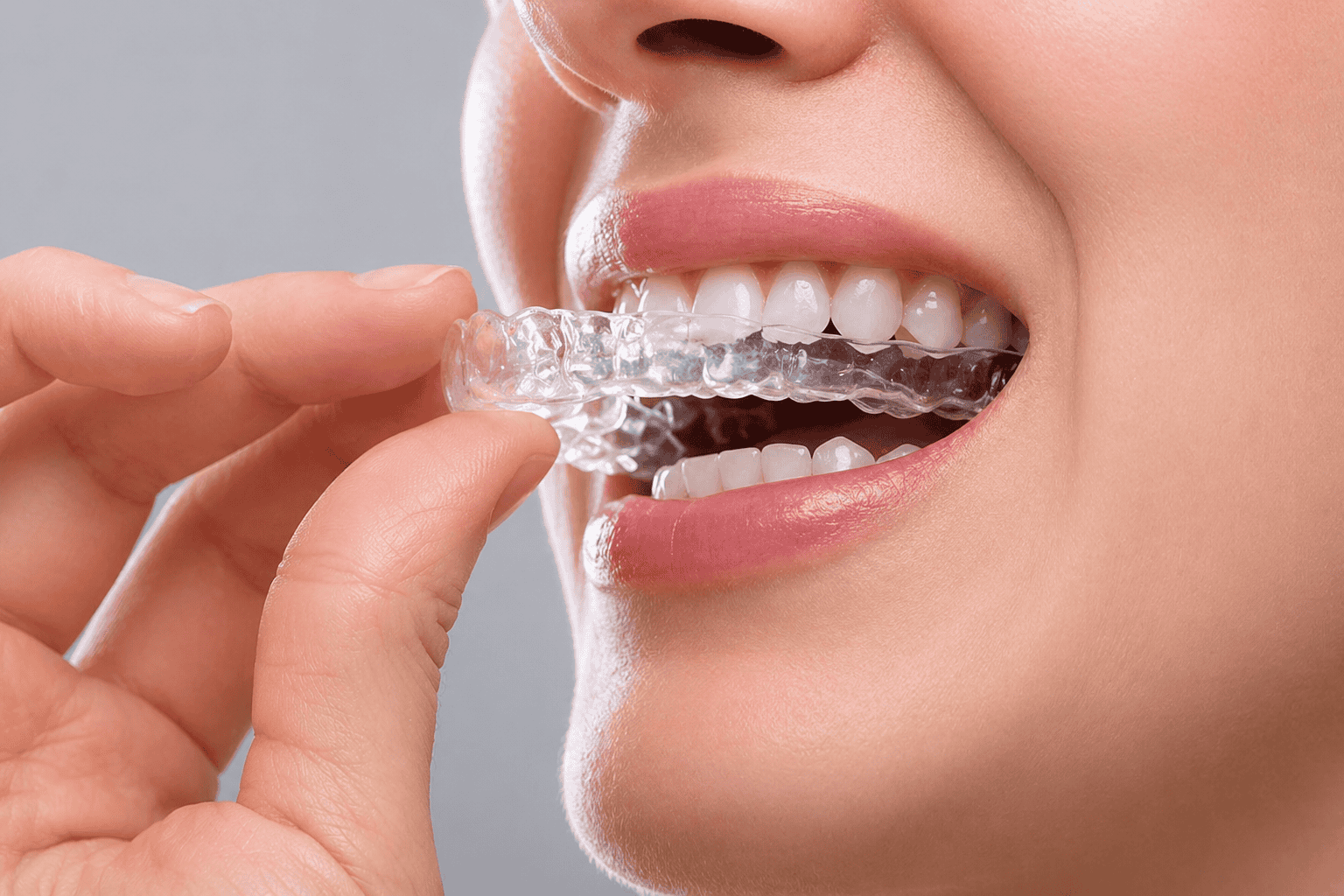
Night guards protect teeth by creating a durable physical barrier between the upper and lower dental arches that absorbs and redistributes the force of grinding and clenching across the entire bite surface. Without that barrier, teeth grinding (bruxism) generates up to 250 pounds of force per square inch, according to Johns Hopkins Medicine, enough to crack enamel, fracture existing dental work, and strain the temporomandibular joint (TMJ) over time. A 2024 meta-analysis published in the Journal of Clinical Medicine found that bruxism affects 22.22% of the global population, with North America showing the highest sleep bruxism prevalence at 31%. Most people who grind their teeth do so during sleep and have no idea the damage is happening until a dentist identifies the wear patterns. This article explains how night guards work at the mechanical level, what they protect against, how to choose the right type, and how to care for one so it lasts.
What Is a Night Guard and How Does It Protect Your Teeth
A night guard is a removable dental appliance, also called an occlusal guard or occlusal splint, worn over the teeth during sleep to prevent direct tooth-to-tooth contact caused by grinding and clenching. The guard sits over either the upper or lower arch and creates a smooth, shock-absorbing surface that intercepts the grinding force before it reaches the enamel, the roots, or the jaw joint.
The protective mechanism works through force distribution. During normal chewing, the average bite force measures approximately 162 pounds per square inch, and food between the teeth absorbs much of that pressure. During bruxism, there is no food to cushion the contact, and the force escalates to 250 pounds or more concentrated on individual tooth cusps. A night guard spreads that force across the entire surface of the appliance rather than allowing it to concentrate on a few contact points. The result is dramatically reduced stress on each tooth, reduced compression on the TMJ disc, and reduced strain on the masticatory muscles that power the clenching cycle.
Night guards also reposition the jaw slightly, placing the condyles (the rounded ends of the mandible) in a more relaxed, neutral posture inside the joint socket. This repositioning reduces the resting tension in the masseter and temporalis muscles, which helps break the clenching reflex that drives much of the damage from sleep bruxism. Research published in the International Classification of Sleep Disorders (ICSD-R) notes that 85-90% of the general population grinds their teeth to some degree at some point in their lives, but only about 5% develop clinical bruxism severe enough to cause damage. A night guard is the first-line defense for that 5%.
Do Dentists Recommend Night Guards
Yes, dentists recommend night guards as the primary conservative treatment for bruxism because they protect teeth from grinding damage without requiring any irreversible changes to the teeth, bite, or jaw. The American Dental Association (ADA) reported in a 2021 survey that over 70% of dentists observed increased teeth grinding and clenching among their patients, and 63% reported a rise in chipped and cracked teeth directly linked to stress-related bruxism. These findings reinforced what most dental professionals already know: a night guard is the most cost-effective way to prevent the cascade of damage that untreated grinding produces.
A dental exam is the starting point for determining whether you need a night guard. During the exam, your dentist checks for the telltale signs of bruxism: flattened biting surfaces on the molars, stress fractures in existing fillings, enamel wear that exposes the dentin layer underneath, and tenderness in the jaw muscles upon palpation. Many patients in our Littleton, Colorado office discover they grind their teeth only after we identify these wear patterns during a routine cleaning appointment.
Why Do Dentists Recommend Night Guards Over Other Treatments
Dentists recommend night guards over other treatments because night guards are conservative, reversible, and effective for the majority of bruxism patients without requiring medication, surgery, or permanent changes to the teeth. Unlike options such as bite adjustment (which permanently reshapes tooth surfaces), Botox injections (which require repeat treatments every three to four months), or muscle relaxants (which carry side effects and are only recommended short-term), a custom night guard addresses the problem at its mechanical source by physically separating the teeth during the hours when unconscious grinding occurs. The guard can be adjusted, replaced, or discontinued at any time without lasting consequences to the teeth or jaw.
What Does a Night Guard Protect Against
A night guard protects against enamel erosion, cracked and chipped teeth, TMJ strain, tension headaches, damage to existing dental work, and the progressive bite changes that untreated bruxism causes over months and years. Each of these consequences carries its own treatment cost, which is why a single night guard often prevents thousands of dollars in restorative dental procedures.
Night guards protect the following:
- Enamel, which does not regenerate once worn away by grinding and cannot be restored without crowns or veneers
- Tooth structure, preventing the cracks and fractures that lead to emergency visits, root canals, and extractions
- The TMJ disc and joint capsule, reducing compression that leads to jaw disorder symptoms like clicking, locking, and chronic pain
- Existing dental crowns and bridges, which can crack under bruxism forces just as natural enamel does
- Porcelain veneers and cosmetic bonding, both of which are vulnerable to chipping from nighttime grinding
- Dental implants, which can suffer abutment loosening and crown fracture under sustained grinding pressure
- The jaw muscles, reducing the chronic tension that produces morning headaches and facial soreness
The cost comparison between prevention and repair makes the case clearly:
| Preventive Investment | Typical Cost | Restorative Procedure (If Unprotected) | Typical Cost |
|---|---|---|---|
| Custom night guard from dentist | $400 to $800 | Single dental crown | $800 to $1,500+ |
| Custom night guard from dentist | $400 to $800 | Three-unit dental bridge | $2,100 to $4,500 |
| Custom night guard from dentist | $400 to $800 | Root canal plus crown | $1,500 to $3,000+ |
| Custom night guard from dentist | $400 to $800 | Single dental implant | $3,000 to $5,000+ |
Sources: ADA Dental Fee Survey (2024); FAIR Health consumer database; SOVA Night Guard (restorative cost data); GoodRx (night guard cost data)
A single custom night guard that costs $400 to $800 and lasts three to five years can prevent damage that would otherwise require multiple crowns, a bridge, or implant placement costing many thousands of dollars. Protecting existing dental fillings and restorations from cracking under grinding forces is another way a night guard saves money and prevents unnecessary retreatment.
Custom Night Guard vs Over the Counter
The difference between a custom night guard and an over-the-counter (OTC) guard comes down to fit, material quality, durability, and effectiveness. Custom night guards are fabricated in a dental laboratory from precise impressions or digital scans of your teeth, producing an appliance that matches the contours of your bite exactly. OTC guards come in generic sizes or use a boil-and-bite method that provides a rough approximation of your dental arch but cannot match the precision of a lab-made device.
Custom night guards use high-grade acrylic or dual-laminate materials (hard acrylic on the outside, soft liner on the inside) engineered to withstand years of grinding force. Custom guards last three to five years with proper care, according to dental industry standards. OTC boil-and-bite guards use softer thermoplastic materials that compress and deform under heavy grinding, typically lasting only three to six months before needing replacement. The initial cost difference between a $400-$800 custom guard and a $15-$100 OTC guard narrows significantly when you factor in the replacement cycle: replacing an OTC guard every three to six months for five years costs as much as or more than a single custom guard, without providing the same level of protection.
For patients who participate in contact sports, it is important to know that a night guard and a sports guards serve different purposes. A sports guard absorbs external impact forces during athletic activity, while a night guard absorbs internal grinding forces during sleep. The two devices are not interchangeable, and patients who both grind their teeth and play contact sports need both appliances.
Can a Night Guard Help With TMJ
Yes, a night guard can help with TMJ disorder because it reduces the grinding force that compresses the articular disc inside the temporomandibular joint and relaxes the muscles that drive the clenching cycle. A properly fitted night guard positions the jaw in a slightly open, neutral posture that decompresses the TMJ and allows the muscles to release the sustained tension that causes jaw pain, clicking, and headaches. TMJ treatment often begins with a custom occlusal guard as the first conservative intervention before considering more invasive options like injections or surgery.
The ADA reported in 2021 that 62% of surveyed dentists observed increased TMJ disorder symptoms among their patients, much of it linked to stress-driven bruxism. For these patients, a night guard serves dual purposes: it protects the teeth from grinding damage and it reduces the mechanical load on the jaw joint that perpetuates TMD symptoms.
Why Do Night Guards Say Not to Use if You Have TMJ
Some over-the-counter night guards carry a warning against use with TMJ disorder because a poorly fitting guard can actually worsen TMJ symptoms by forcing the jaw into an unnatural position during sleep. OTC guards are designed from generic molds that do not account for individual bite alignment, jaw joint position, or the specific disc displacement pattern that a TMJ patient may have. Wearing an OTC guard that does not match your bite can shift the condyle further out of alignment, increase muscle strain, and aggravate existing disc displacement. This warning does not apply to custom night guards fabricated by a dentist. A dentist-made guard is designed around your specific bite and jaw position, which means it supports the TMJ rather than stressing it. Patients with TMJ symptoms should always get a professionally fitted guard rather than an off-the-shelf product.
Is It Okay to Wear a Night Guard Every Night
Yes, it is okay to wear a custom night guard every night, and nightly wear is the standard recommendation from dental professionals for patients with bruxism. Sleep bruxism occurs involuntarily during sleep, and the only way to protect teeth consistently is to wear the guard every time you sleep. Skipping nights leaves your teeth, enamel, and jaw joint unprotected during exactly the hours when grinding damage occurs. A properly fitted custom guard is designed for nightly use over a span of three to five years and is made from biocompatible materials that are safe for extended oral contact.
The key qualifier is “custom-fitted.” OTC guards made from softer materials may not be suitable for every-night use over long periods because the soft thermoplastic can harbor bacteria more readily, deform under repeated stress, and create an uneven bite surface as the material compresses. Custom hard acrylic or dual-laminate guards maintain their shape and hygiene profile far more reliably over years of nightly wear.
What Is the Downside of Wearing a Night Guard
The downsides of wearing a night guard include an adjustment period of one to two weeks, the upfront cost of a custom-fitted appliance, the daily commitment to cleaning and maintenance, and the fact that OTC guards may cause discomfort or jaw soreness if they do not fit properly. These downsides are real but manageable, and they are significantly outweighed by the cost and discomfort of the dental damage that an unprotected grinder will eventually face.
The adjustment period is the most common complaint. Wearing any new appliance in your mouth during sleep feels unusual at first. Most patients report that the sensation becomes unnoticeable within a few nights, and the improvement in morning jaw comfort and headache reduction reinforces the habit. Patients who feel anxious about the process can take advantage of our no-fear dentistry approach, which prioritizes comfort and clear communication at every step.
Insurance coverage helps offset the cost. Many PPO dental plans cover approximately 50% of the cost of a custom night guard when the dentist documents bruxism as medically necessary, according to data from GoodRx and Delta Dental. Most plans allow one guard every 36 to 60 months, aligning with the typical lifespan of a well-maintained custom appliance.
Do Night Guards Change Your Bite
A properly fitted custom night guard does not change your bite. The appliance is designed to maintain your existing bite relationship by evenly distributing contact across the guard surface. OTC guards, however, can shift bite alignment over time because their imprecise fit allows teeth to settle unevenly against the soft material. This is one of the most important reasons to choose a custom guard over a store-bought alternative, especially for long-term nightly use. Your dentist will check the fit of your guard during regular appointments and make adjustments if any bite changes develop.
How to Care for Your Night Guard
Caring for your night guard properly extends its lifespan, prevents bacterial buildup, and keeps the appliance fitting comfortably over years of nightly use. A dental cleaning appointment is a good time to bring your guard in for professional inspection, because your hygienist can check for cracks, wear spots, and fit changes that you might not notice at home.
Follow these steps to clean and maintain your night guard:
- Rinse the guard under cool running water immediately after removing it each morning to wash away saliva and loose debris
- Brush the guard gently with a soft-bristled toothbrush and a non-abrasive cleanser (liquid hand soap or a denture cleaner work well; do not use toothpaste, as the abrasive particles can scratch the surface)
- Rinse the guard thoroughly after brushing to remove all cleanser residue
- Allow the guard to air dry completely on a clean surface before storing it; bacteria thrive in moisture, so drying between uses is important
- Store the guard in a ventilated hard case that allows airflow; avoid sealed plastic bags or containers that trap moisture
- Keep the guard away from heat, including hot water, car dashboards, and direct sunlight, because heat warps acrylic and thermoplastic materials
- Soak the guard in a denture cleaning solution or a mixture of cool water and white vinegar once a week for deeper disinfection
- Bring the guard to every dental visit so your dentist can inspect it for wear, adjust the fit if needed, and confirm that it is still providing proper protection
How Long Do Night Guards Last
Custom night guards made from hard acrylic or dual-laminate material last three to five years with proper care, and some patients get even longer use depending on the severity of their grinding. The lifespan depends on how aggressively you grind, how well you maintain the appliance, and whether your bite changes over time due to dental work or natural shifting. OTC boil-and-bite guards last only three to six months before the soft material compresses, loses its shape, and stops providing effective protection. Signs that your night guard needs replacement include visible cracks, thinning in the areas where your teeth contact the guard, a loose or rocking fit, and rough edges that irritate your gums or cheeks.
Frequently Asked Questions
How Much Does a Custom Night Guard Cost
A custom night guard from a dentist costs $400 to $800, according to the ADA Dental Fee Survey and FAIR Health consumer database. Many dental insurance plans cover approximately 50% of this cost when the dentist documents bruxism as medically necessary. OTC boil-and-bite guards cost $15 to $100 but require frequent replacement and do not provide the same level of protection or comfort as a custom-fitted appliance.
Should I Wear a Night Guard on Top or Bottom Teeth
Most dentists fabricate night guards for the upper teeth because the upper arch provides a broader surface area for force distribution and tends to fit more securely during sleep. However, some patients receive a lower-arch guard depending on their bite relationship, the location of their dental restorations, or comfort preference. Your dentist will determine which arch works best for your specific situation based on your exam and impressions.
Can I Wear a Night Guard With Braces
You should not wear a standard night guard with traditional braces, because the brackets and wires change the position of your teeth continuously, and a rigid guard would interfere with that movement. If you grind your teeth while undergoing orthodontic treatment, your orthodontist can provide a soft, flexible guard designed to accommodate the shifting teeth without disrupting the treatment plan. Once your braces are removed and your teeth have stabilized, a permanent custom night guard can be fabricated.
How Do I Know if I Need a Night Guard
You may need a night guard if you wake up with jaw soreness or stiffness, experience frequent morning headaches near the temples, notice flattened or chipped tooth surfaces, feel increased tooth sensitivity without an obvious cause, or hear from a sleep partner that you grind audibly during the night. Your dentist can confirm the diagnosis by examining your teeth for the characteristic wear patterns that bruxism produces, and can recommend a custom guard if the evidence supports it.
Will a Night Guard Stop My Teeth From Shifting
A night guard is not designed to prevent teeth from shifting the way a retainer does, because its primary function is to absorb grinding force rather than hold teeth in position. However, by preventing the uneven wear and bite changes that bruxism causes, a night guard indirectly helps maintain tooth alignment. If you need both grinding protection and retention after orthodontic treatment, your dentist can design an appliance that serves both functions.
Can Children Wear Night Guards
Children can wear night guards in cases of severe bruxism that is causing visible tooth damage, but most pediatric grinding does not require treatment because children typically outgrow the habit as their jaw and permanent teeth develop. A 2024 meta-analysis in the Journal of Clinical Medicine reported that up to 31% of children experience sleep bruxism. If your child grinds heavily and shows signs of tooth wear or jaw pain, a pediatric dentist can evaluate whether a guard is appropriate or whether monitoring alone is sufficient.
Wrapping It Up
A night guard is one of the simplest and most cost-effective investments you can make in your dental health. For a one-time cost of a few hundred dollars, a custom-fitted guard absorbs the 250 pounds of grinding force that would otherwise erode your enamel, crack your teeth, and strain your jaw joint night after night. The math is straightforward: a single guard that lasts three to five years costs a fraction of the crowns, bridges, root canals, and implants that untreated bruxism eventually demands.
If you suspect you grind your teeth, or if a sleep partner has told you that they hear grinding sounds at night, schedule an exam so we can evaluate your teeth and jaw for signs of wear. Our team at Southbridge Dentistry can determine whether a night guard is right for you and have a custom appliance fabricated to fit your bite precisely. Call us at 303.798.4967 to get started.