

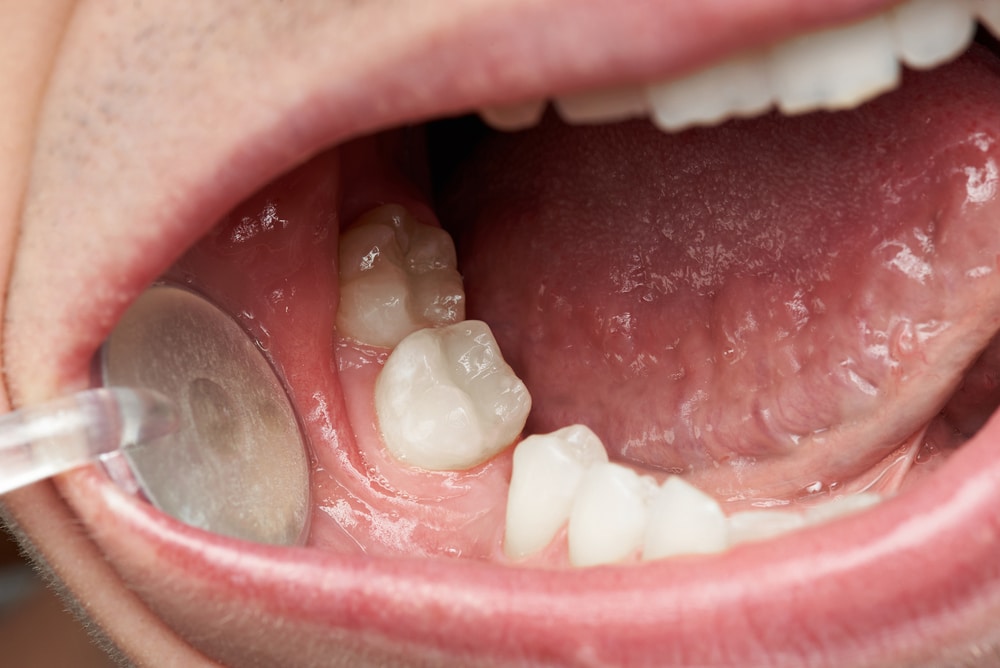
Bone loss after tooth loss happens because the jawbone no longer receives the stimulation it needs from the tooth root. Every time you chew, your tooth roots push force into the bone, signaling it to keep rebuilding. When a tooth is removed or falls out, that signal stops. The bone in that area begins to shrink through a process called resorption. A systematic review published in PubMed found that the alveolar ridge loses 29% to 63% of its horizontal width and 11% to 22% of its vertical height within the first six months after extraction.
This is not a slow, distant problem. Bone resorption begins within weeks. Research published in the International Journal of Dentistry reported that alveolar bone can shrink by 40% to 60% in both height and width within the first two to three years. After that, the loss continues at a rate of 0.25% to 0.5% per year for the rest of your life if the tooth is never replaced.
We see the effects of this process regularly in our Littleton, CO practice. Patients who lost a tooth years ago often come in needing additional procedures before a replacement can be placed, specifically because the bone has resorbed. Understanding how and why this happens helps you make better decisions about your care after any tooth loss.
What Triggers Bone Resorption
The jawbone is living tissue. It constantly breaks down and rebuilds itself in response to the forces placed on it. This process is called remodeling. Tooth roots are the primary source of those forces in the jaw.
When a tooth is extracted or knocked out, the bone surrounding the root socket no longer has a reason to maintain itself. The body begins to reabsorb it. A study published in PubMed confirmed that loss of teeth results in irreversible alveolar bone resorption. The outer wall of the socket, called the buccal plate, is usually the first area to break down because it is the thinnest.
The NIDCR reports that adults aged 20 to 64 retain an average of 25.5 teeth. Every missing tooth represents a site where bone resorption may already be underway.
The Timeline of Bone Loss After Extraction
Bone loss after extraction follows a predictable pattern. The fastest changes happen early, and the rate slows over time.
In the first one to two weeks, the empty socket fills with a blood clot. The body begins clearing bone debris and soft tissue starts to cover the opening. No significant bone loss is visible yet, but the resorption process has already started at the cellular level.
Between three and six months, the most dramatic changes occur. A clinical trial registered with ClinicalTrials.gov noted that up to 50% of bone loss occurs during the first three months after extraction. Research published in PubMed measured 29% to 63% horizontal bone loss and 11% to 22% vertical bone loss at the six-month mark. The ridge narrows significantly during this window.
From six months to one year, the rate slows but does not stop. A study published in PMC found that an estimated 50% of alveolar bone width is lost within 12 months after extraction, with 30% of that loss occurring in the first 12 weeks alone.
After two to three years, cumulative bone loss can reach 40% to 60% in both height and width, according to research published in the International Journal of Dentistry. After this point, the bone continues to shrink at approximately 0.25% to 0.5% per year.
We recommend that every patient in the Littleton and South Denver area discuss replacement options as soon as possible after a tooth is lost or extracted. The earlier you act, the more bone you preserve.
Bone Loss Timeline After Tooth Extraction
| Time After Extraction | What Happens | Estimated Bone Loss |
| 0 to 2 weeks | Blood clot forms, socket begins healing | Minimal visible loss; cellular resorption starts |
| 1 to 3 months | Immature bone fills socket; ridge narrows rapidly | Up to 30% of total width loss |
| 3 to 6 months | Most aggressive resorption period | 29-63% horizontal loss, 11-22% vertical loss |
| 6 to 12 months | Rate slows; continued narrowing of the ridge | Up to 50% total width loss |
| 1 to 3 years | Gradual ongoing resorption | 40-60% total height and width loss |
| 3+ years | Slow chronic resorption continues indefinitely | 0.25-0.5% additional loss per year |
Data compiled from PubMed systematic reviews, the International Journal of Dentistry, PMC clinical studies, and ClinicalTrials.gov registered research.
Why Bone Loss Gets Worse With Multiple Missing Teeth
Every missing tooth creates its own zone of resorption. When several teeth are missing in a row, the zones overlap and the total bone loss accelerates. The ridge can become so thin and short that standard restorations are no longer possible without rebuilding the bone first.
The CDC reports that about 26% of adults aged 65 or older have 8 or fewer remaining teeth. The NIDCR adds that 17.3% of adults aged 65 and older have no remaining teeth at all. In these cases, the jawbone has often resorbed to the point where the face visibly changes shape. The lower third of the face collapses inward, the chin moves forward, and the lips lose their support.
Long-term denture wearers are especially affected. Dentures rest on the gums and provide no root stimulation to the bone underneath. The bone continues to shrink beneath the denture, which is why dentures need to be relined or replaced every 5 to 8 years as the jaw changes shape.
Patients in South Denver who have been wearing dentures or partial dentures for years may benefit from an evaluation to assess current bone levels and discuss whether implant-supported options are still available.
How Gum Disease Accelerates the Process
Periodontal disease attacks the bone around teeth even before those teeth are lost. The NIDCR identifies periodontal disease as the most common cause of tooth loss in adults. The ADA reports that roughly 42% of adults aged 30 and older have some form of periodontitis.
When gum disease advances to periodontitis, bacteria trigger an inflammatory response that breaks down the bone and connective tissue holding teeth in place. Teeth loosen, shift, and eventually fall out. By the time a tooth is lost to gum disease, a significant amount of bone has already been destroyed by the infection itself.
This means that patients who lose teeth to gum disease start with less bone than patients who lose teeth to trauma or decay. That makes future restoration more complex and often requires bone grafting before any replacement can be placed.
Regular dental cleanings are the most effective way to catch gum disease early, before it destroys bone. We screen for periodontal disease at every hygiene appointment in our Littleton office.
How Bone Grafting Rebuilds What Was Lost
Bone grafting is a procedure that adds bone material to areas of the jaw that have resorbed. The graft provides a scaffold for your body to grow new bone onto, gradually rebuilding the ridge so it can support a dental implant or other restoration.
A large-scale study published in the Journal of Functional Biomaterials analyzed over 45,000 dental bone grafts and found a clinical success rate of 97.83%. A separate PubMed study with a mean follow-up of 70 months reported a 100% bone graft success rate and a 97.2% implant survival rate in grafted sites.
We perform bone grafting procedures at our Littleton office for patients who have experienced bone loss and want to move forward with implants. The most common type is socket preservation, where graft material is placed into the tooth socket immediately after extraction. This prevents the rapid bone loss that normally occurs in the first three to six months.
For patients who lost teeth years ago and already have significant bone loss, ridge augmentation grafting can rebuild the width and height of the jaw. Healing from a bone graft typically takes four to nine months, depending on the size and location of the graft. After the new bone has integrated, an implant can be placed on a solid foundation.
The Only Replacement That Stops Bone Loss
Dental implants are the only tooth replacement that stops jawbone resorption. The titanium post sits inside the bone and delivers chewing forces directly to the jaw, mimicking the function of a natural tooth root. This stimulation signals the bone to keep rebuilding itself.
Bridges, partial dentures, and full dentures replace the visible part of the tooth but not the root. The bone underneath these restorations continues to shrink because it receives no stimulation. Only implants address the root cause of bone loss after tooth extraction.
A systematic meta-analysis published in the Journal of Dentistry found that modern dental implants have a 10-year survival rate of 96.4%. For patients missing a full arch, All-on-4 implant restorations use four strategically placed implants to support an entire set of fixed teeth while preserving the jawbone.
We evaluate bone density and volume with digital X-rays during every new patient exam at Southbridge Dentistry so we can identify resorption early and plan accordingly.
Frequently Asked Questions
How Long Does Bone Loss Take After Losing a Tooth?
Bone loss after losing a tooth begins within the first few weeks. The most significant changes happen in the first three to six months. A PubMed systematic review found 29% to 63% horizontal bone loss within six months of extraction. By 12 months, up to 50% of total ridge width may be lost. The process slows after the first year but continues at a rate of 0.25% to 0.5% per year indefinitely if the tooth is not replaced.
Can Dental Bone Loss Grow Back?
Dental bone loss cannot grow back on its own. PubMed research confirms that alveolar bone resorption after tooth loss is irreversible without intervention. The body does not regenerate jawbone once it has been resorbed. However, bone grafting can rebuild lost bone by providing a scaffold for new growth. Studies show bone graft success rates above 97%, making it a highly reliable procedure for patients in Littleton who need bone rebuilding before implant placement.
How Common Is Dental Bone Loss?
Dental bone loss is extremely common. Every person who has ever had a tooth extracted or lost a tooth experiences some degree of bone resorption at that site. The CDC reports that adults aged 20 to 64 are missing an average of 2 teeth due to disease. The NIDCR reports that 17.3% of adults aged 65 and older have lost all their teeth. Each of those extraction sites has experienced bone loss, and in many cases the resorption has been ongoing for years or decades.
Will Bone Loss Continue 10 Years After Tooth Extraction?
Bone loss will continue 10 years after tooth extraction and beyond. The fastest resorption occurs in the first two to three years, with 40% to 60% of bone volume lost during that period. After that, resorption continues at a slower rate of approximately 0.25% to 0.5% per year. Ten years after extraction, a significant amount of bone may be gone, but grafting can still rebuild the site for implant placement in many cases.
How Many Implants Are Needed for 3 Missing Teeth?
For three missing teeth in a row, two implants are typically needed. An implant is placed at each end of the gap, and a three-unit bridge is attached across them. This avoids the need to place an implant for every single tooth while still providing full chewing function and bone stimulation at both anchor points. We plan every implant case individually at our South Denver office based on the location of the gap, the health of the surrounding bone, and the patient’s overall goals.
How Painful Is Bone Grafting for Teeth?
Bone grafting for teeth involves some soreness, but most patients describe it as mild to moderate and manageable with over-the-counter pain medication. The procedure itself is done under local anesthesia, so you feel no pain during the graft. We also offer IV sedation dentistry for patients in Littleton who feel anxious about any surgical procedure. Most discomfort peaks within the first two to three days and fades quickly after the first week.
Does Removing Teeth Stop Bone Loss?
Removing teeth does not stop bone loss. Extraction actually accelerates bone loss at the extraction site because the root stimulation is now completely gone. However, extracting a tooth that is severely infected with advanced gum disease can stop the active destruction being caused by the infection. The key is to replace the tooth with an implant or protect the site with a socket preservation graft as soon as possible after extraction to minimize the resorption that follows.
What It All Comes Down To
Bone loss after tooth loss is not optional. It happens to every person who loses a tooth. The only variables are how fast it happens and whether you take steps to slow it down or reverse it.
Socket preservation grafting right after extraction, bone grafting for sites that have already resorbed, and dental implants to provide permanent root stimulation are all proven solutions that we offer here in Littleton, CO. We have been helping South Denver families protect their oral health for over 40 years.
Call our office at 303-798-4967 or request an appointment online to schedule your consultation.