

Dental implants are the strongest and longest-lasting option for replacing missing teeth. A systematic meta-analysis published in the Journal of Dentistry found that modern implants have a 10-year survival rate of 96.4%. No other tooth replacement comes close to that number. Bridges average 5 to 15 years. Full dentures last 5 to 8 years before they need to be replaced. Implants routinely last 25 years or more, and many last a lifetime.
The biggest difference between implants and every other option is what happens underneath the gum line. Implants are the only replacement that preserves the jawbone. Bridges sit on top of neighboring teeth. Dentures rest on the gums. Neither one replaces the tooth root, so the bone underneath continues to shrink after the tooth is gone.
We place dental implants for patients across Littleton, CO and the South Denver area. We also offer bridges, dentures, and All-on-4 restorations. The right choice depends on your specific situation. This post breaks down each option so you can see how they compare side by side.
How Dental Implants Work
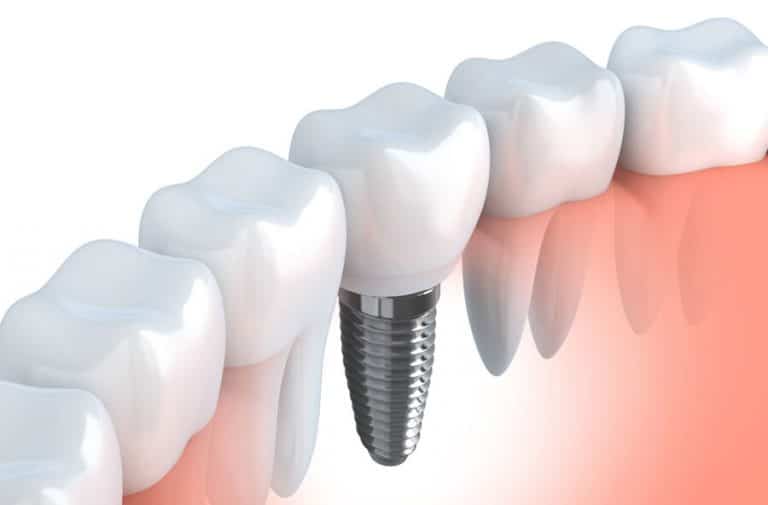
A dental implant is a titanium post that is surgically placed into the jawbone. The post acts as an artificial tooth root. Over the next several months, the bone fuses with the titanium through a process called osseointegration. Once healed, a custom crown is attached to the post through a small connector called an abutment.
The American Academy of Implant Dentistry (AAID) reports that approximately 93% of implants placed in the United States use titanium. This material is biocompatible, meaning the body accepts it without rejection in the vast majority of cases.
Because the implant sits inside the bone, it delivers chewing forces directly to the jaw, just like a natural tooth root. This stimulation keeps the bone dense and healthy. Research shows that the alveolar ridge can lose up to 25% of its width within the first year after a tooth is lost if no root replacement is placed. Implants prevent that loss.
We work with patients in Littleton who need a single tooth replaced or who need multiple implants across the mouth. After placement, we attach a custom implant restoration that matches the color and shape of your surrounding teeth.
How Bridges Compare to Implants
A dental bridge replaces one or more missing teeth by anchoring an artificial tooth to crowns placed on neighboring teeth. The healthy teeth on either side of the gap are filed down to accept those crowns. The artificial tooth, called a pontic, fills the space in between.
Bridges are effective and have been used for decades. The ADA reports that well-maintained bridges can last 10 to 15 years. The Cleveland Clinic puts the average closer to 5 to 7 years, with longer lifespans possible under ideal conditions.
The main limitation of a bridge is that it does not replace the tooth root. The bone under the pontic still resorbs over time because it receives no stimulation. Bridges also require altering two healthy teeth to serve as anchors. If either of those anchor teeth develops a problem later, the entire bridge may need to be replaced.
Bridges do not require surgery, which makes them a good option for patients who are not candidates for implants due to medical conditions or bone loss that cannot be corrected with grafting.
How Dentures Compare to Implants
Dentures are removable appliances that replace multiple missing teeth or a full arch. Partial dentures replace several teeth in different areas of the mouth. Full dentures replace an entire upper or lower set of teeth.
The NIDCR reports that 17.3% of adults aged 65 and older have no remaining teeth. Many of those adults rely on full dentures. Dentures restore the ability to chew and speak, but they have clear limitations when compared to implants.
Dentures sit on the gums. They provide no root stimulation, so jawbone loss continues underneath them. As the bone shrinks over time, the denture fit loosens. The AAID notes that denture wearers often need relining or replacement every 5 to 8 years as the jaw changes shape.
Dentures also restore only a fraction of natural biting force. Most studies show that full dentures provide about 20% to 25% of the chewing power of natural teeth. This often leads to dietary changes, with patients avoiding harder foods like raw vegetables, nuts, and meats. A systematic review published in PubMed found that tooth loss and poor chewing ability are directly linked to nutritional deficiencies and dietary imbalance.
For patients in the South Denver area who currently wear dentures and want a more stable solution, implant-supported dentures offer a significant upgrade.
How All-on-4 Compares to Traditional Dentures
All-on-4 implant restorations use four strategically placed implants per jaw to support a full arch of fixed teeth. The teeth are not removable. They stay in place permanently, just like natural teeth.
Research shows that All-on-4 implants have cumulative survival rates between 94.8% and 98% at the 5 to 10 year mark, according to the AAID. That is dramatically better than the 5 to 8 year lifespan of a traditional denture.
All-on-4 also preserves jawbone. Because the implants are embedded in the bone, they continue to stimulate the jaw and prevent the resorption that makes traditional dentures fit poorly over time. Patients with All-on-4 eat a full range of foods, speak clearly, and do not worry about slipping or adhesives.
This option works well for patients in Littleton who have already lost most or all of their teeth and want a permanent, fixed solution without the bulk and instability of removable dentures.
Tooth Replacement Options Compared
| Feature | Dental Implant | Fixed Bridge | Partial Denture | Full Denture | All-on-4 |
| Average Lifespan | 25+ years | 5 to 15 years | 5 to 10 years | 5 to 8 years | 20+ years |
| Preserves Jawbone | Yes | No | No | No | Yes |
| Requires Surgery | Yes | No | No | No | Yes |
| Affects Healthy Teeth | No | Yes (2 anchor teeth) | May clasp to natural teeth | No | No |
| Chewing Power | Near-natural | Good | Moderate | 20-25% of natural | Near-natural |
| Removable | No | No | Yes | Yes | No |
| 10-Year Survival Rate | 96.4% | 75-90% | Varies | Requires replacement | 94-98% |
Data compiled from the Journal of Dentistry, American Academy of Implant Dentistry (AAID), American Dental Association (ADA), and Cleveland Clinic.
Who Is a Good Candidate for Implants
Most adults with one or more missing teeth are candidates for dental implants. The main requirement is having enough healthy jawbone to support the titanium post. Patients who have experienced significant bone loss may need bone grafting before an implant can be placed.
Good general health matters too. Conditions like uncontrolled diabetes or heavy smoking can slow healing and reduce implant success rates. A study published in PubMed found that smoking and uncontrolled systemic disease are among the most consistent risk factors for implant failure.
Patients with dental anxiety should know that we offer IV sedation dentistry for implant procedures. Sedation keeps you deeply relaxed throughout the entire process, with little to no memory of the procedure afterward.
We evaluate every patient individually at our Littleton office. A thorough exam with digital X-rays tells us exactly how much bone is available and whether you are a strong candidate for implants right away or need preliminary treatment first.
What Happens if You Wait Too Long to Replace a Tooth
Waiting to replace a missing tooth makes the problem harder to fix later. The jawbone starts shrinking within months. Surrounding teeth shift toward the gap. Your bite changes. Plaque collects in the new spaces between shifted teeth, raising the risk of cavities and gum disease.
The ADA confirms in JADA that shifted teeth create hard-to-reach areas where harmful plaque and tartar accumulate, potentially leading to periodontal disease. The NIDCR identifies periodontal disease as the most common cause of tooth loss in adults, meaning one missing tooth can set off a cycle that leads to more tooth loss.
Bone loss also makes implant placement more complex. Patients who wait years after losing a tooth often need bone grafting before an implant can be placed. That adds time and additional procedures to the treatment.
If you have recently lost a tooth, or if you had a tooth extracted, the best time to plan your replacement is now. We schedule consultations specifically to discuss replacement options so patients in Littleton and South Denver can make informed decisions early.
Frequently Asked Questions
When Do Most Dental Implants Fail?
Most dental implants that fail do so within the first year after placement. This early failure is usually related to the implant not integrating properly with the bone, a condition sometimes caused by infection, smoking, or poor bone quality. A systematic review in the Journal of Dentistry found a 10-year survival rate of 96.4% for modern implants, meaning long-term failure after the first year is uncommon. We monitor every implant closely during the healing period at our Littleton practice to catch any issues early.
Can Someone Tell if You Have Dental Implants?
No one can tell you have dental implants just by looking at your smile. The crown placed on top of the implant is custom-made to match the color, shape, and size of your natural teeth. Implants also feel like natural teeth when you chew and speak. The only way to identify an implant is through a dental X-ray. We match every implant crown to your existing teeth so the result looks seamless.
Which Is Better, a Root Canal or an Implant?
A root canal is better when the natural tooth can still be saved. Keeping your own tooth is always the first choice because it preserves the root and the bone around it. An implant is the better option when the tooth is too damaged or decayed to repair. A JADA study showed that both root canals and single-tooth implants have high long-term success rates, so the right choice depends on the condition of the specific tooth.
What Is the Newest Type of Denture?
The newest type of denture is the implant-supported overdenture. It snaps onto two or more implants placed in the jawbone, giving the denture a secure anchor that prevents slipping and movement. Unlike traditional dentures that rest only on the gums, implant-supported versions provide better chewing force and help slow bone loss. We offer both traditional and implant-supported full arch options for patients in the South Denver area.
What Is the Most Painful Day After Dental Implants?
The most painful day after dental implants is usually the second or third day, when swelling peaks. Most patients describe the discomfort as mild to moderate and manageable with over-the-counter pain medication. The Cleveland Clinic notes that the healing process after implant placement takes 6 to 12 weeks. By the end of the first week, most soreness has faded significantly. We provide detailed aftercare instructions and are available for any concerns during your recovery here in Littleton.
How Many 70-Year-Olds Still Have All Their Teeth?
Very few 70-year-olds still have all their natural teeth. The NIDCR reports that adults aged 65 and older have an average of 20.7 remaining teeth out of a full set of 32. The CDC adds that about 1 in 5 adults aged 75 or older have lost all their teeth completely. Regular dental cleanings and early treatment of cavities and gum disease are the most effective ways to keep your natural teeth as you age.
The Bottom Line
Every tooth replacement option has its place. Bridges work well for patients who cannot have surgery. Dentures help patients who have lost most or all of their teeth and need an affordable solution. But when long-term durability, bone preservation, and natural function are the priorities, implants are in a category of their own.
A 96.4% survival rate at 10 years, the ability to preserve jawbone, near-natural chewing power, and a lifespan that often exceeds 25 years make dental implants the gold standard for tooth replacement. For full arch cases, All-on-4 brings those same benefits to patients who need an entire set of teeth.
We have been helping families in Littleton and South Denver replace missing teeth for over 40 years at Southbridge Dentistry. Whether you need a single implant or a full mouth restoration, we will walk you through every option and help you choose the one that fits your health, your goals, and your life.
Call 303-798-4967 or request an appointment online to schedule your consultation.