

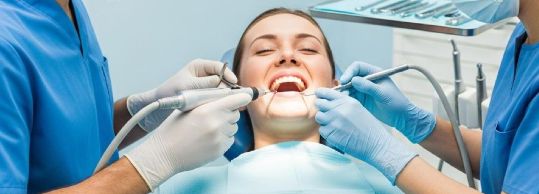
The average adult should get a dental cleaning every six months. This is the standard recommendation from the American Dental Association. However, adults with gum disease, diabetes, or a history of heavy tartar buildup may need cleanings every three to four months. Below, we break down exactly how often you need cleanings, what happens when you skip them, and how plaque and tartar silently damage your teeth between visits.
How Often Do Adults Really Need Dental Cleanings?
Adults really need dental cleanings at least twice a year, or once every six months. This is the baseline that works for most people with healthy gums. According to the CDC, only about 64% of adults aged 18 to 64 visited a dentist in the past year. That means over a third of American adults are going without even one cleaning per year, let alone two.
Here in Littleton, Colorado, we see this firsthand. Patients come in after a year or two away from the chair, and the tartar buildup is significant. At our practice, we recommend cleanings every three to six months depending on your individual oral health. During each visit, our hygienists measure bone levels around every tooth, check for gum recession, and take X-rays once a year to catch problems that are invisible to the naked eye.
The six-month rule is not arbitrary. According to data published in the Journal of the American Heart Association, adults who get at least one professional dental cleaning per year have a measurably lower risk of heart failure compared to those who skip cleanings entirely. Oral health is whole-body health, and twice-yearly cleanings are the foundation.
Some patients need us more often. According to the CDC, approximately 47.2% of adults aged 30 and older have some form of periodontal disease. That number jumps to over 70% for adults 65 and older. If you have been diagnosed with gum disease, we will likely recommend cleanings every three to four months. The same goes for smokers, patients with diabetes, pregnant women, and anyone who builds up tartar quickly.
What Happens During a Professional Dental Cleaning?
During a professional dental cleaning, the hygienist removes plaque and tartar from your teeth and below the gum line using a process called scaling. After scaling, the teeth are polished to smooth the enamel and remove surface stains. Then flossing is done between each tooth to clear any remaining debris.
But a cleaning at our Littleton office goes beyond just scraping and polishing. We perform a full exam at every visit, including an oral cancer screening using the Velscope device, which uses a specialized light to detect abnormal tissue that the eye alone cannot see. According to the American Cancer Society, oral cancers are most commonly diagnosed in adults over age 55. Catching them early during a routine cleaning can be life-saving.
We also check for signs that could mean you need additional treatment, like fillings or restorations for early cavities, or a deeper cleaning if gum disease is present. The goal is always to stop problems before they grow.
Is It Okay to Skip a Dental Cleaning?
No, it is not okay to skip a dental cleaning. Skipping even one visit allows plaque and tartar to accumulate, which directly raises your risk for cavities, gum disease, and eventually tooth loss.
The statistics paint a stark picture. According to the CDC, 91% of adults aged 20 to 64 have had at least one cavity in their lifetime. About 26% of adults currently have untreated tooth decay. These are problems that routine cleanings catch early, before a small cavity becomes a root canal or an extraction.
There is also the whole-body connection. A study published in the journal MDPI Oral found a 28% increased risk of heart disease in individuals with periodontal disease. The Mayo Clinic reports that gum disease has been linked to endocarditis, cardiovascular disease, pregnancy complications, and diabetes management challenges. Skipping a cleaning does not just affect your mouth. It can affect your entire body.
We understand that cost is a factor for many families in Littleton and South Denver. That is why we offer our Dental Savings Network for patients without insurance. It has no yearly maximums, no deductibles, and no claim forms. There is no good reason to skip a cleaning when affordable options exist.
How Quickly Does Plaque Turn to Tartar?
Plaque turns to tartar within 24 to 72 hours. That is just one to three days. Once plaque hardens into tartar, also called calculus, you cannot brush or floss it away. Only a dental professional with specialized scaling instruments can safely remove it.
According to Crest (Procter & Gamble), 68% of adults have tartar on their teeth right now. Tartar forms when minerals in your saliva crystallize within the plaque biofilm, bonding it to the enamel. It collects most heavily along the gum line and between teeth, where bacteria thrive and do the most damage.
This is why brushing twice a day and flossing daily is non-negotiable. You are racing against a 24-hour clock. Every time you skip brushing before bed, plaque gets a head start on hardening. For patients in Littleton who tend to build up tartar fast, we may recommend cleanings every three months instead of six. Staying ahead of tartar is much easier and cheaper than dealing with the gum disease it causes.
What Is Worse, Tartar or Plaque?
Tartar is worse than plaque. Plaque is a soft, sticky biofilm that forms on teeth every day. You can remove it easily with a toothbrush and floss. Tartar is hardened plaque that bonds to your enamel and can only be removed by a dental professional.
Both contain harmful bacteria, but tartar is far more dangerous because it sits permanently on the teeth and under the gum line until a hygienist scrapes it off. Tartar along the gum line causes chronic inflammation, bleeding gums, and eventually periodontal disease. According to the CDC, severe gum disease affects about 9% of all U.S. adults and is the leading cause of tooth loss in older adults. Nearly 1 in 5 adults aged 65 and older have lost all of their teeth, often as a direct result of untreated tartar and gum disease.
If you see yellow or brown deposits near your gum line, that is tartar, and it is time to schedule a cleaning. We use gentle but thorough scaling techniques at our Littleton office. For patients who feel anxious, we offer no-fear dentistry with amenities like music headphones, flat-screen TVs, and sedation options including nitrous oxide and IV sedation.
What Kills Plaque on Your Teeth?
Brushing with fluoride toothpaste, flossing daily, and using an antibacterial mouthwash kills plaque on your teeth. Fluoride strengthens enamel and neutralizes the acids that plaque bacteria produce.
According to a survey by Delta Dental, only about 40% of Americans floss daily, and 20% never floss at all. The ADA recommends brushing for at least two minutes, twice a day, but the average American brushes for only 1 minute and 52 seconds. That gap matters. Every second of missed brushing is a second plaque bacteria use to multiply and attack your enamel.
An electric toothbrush can help remove more plaque than a manual brush, especially for people who tend to rush. Between cleanings, drinking water throughout the day helps wash away food particles and bacteria. But even with perfect home care, some plaque will build up in hard-to-reach spots. That is exactly why we recommend professional cleanings at least twice a year here in Littleton. Our hygienists reach what your toothbrush cannot.
Is It Okay to Scrape Plaque Off Your Teeth at Home?
No, it is not okay to scrape plaque or tartar off your teeth at home. Using sharp objects like metal picks, fingernails, or any DIY tools can scratch your enamel, cut your gums, and push bacteria deeper under the gum line.
According to an ADA survey, 61% of Americans admit to using fingernails to remove food stuck between their teeth, and 40% have used cards or folded paper. About 63% of those respondents knew these methods could cause harm, and 42% said they actually felt pain while using them. The message is simple: leave tartar removal to a trained professional.
If you feel rough, hard buildup on your teeth, schedule a cleaning. We have been doing this in Littleton since 1982, and our experienced hygienists use the right instruments to remove tartar safely and comfortably. For patients who have not been to the dentist in a long time and feel nervous, IV sedation dentistry is available so we can get everything done while you stay completely relaxed.
Do You Need a Deep Cleaning or a Regular Cleaning?
You need a regular cleaning, called a prophylaxis, if your teeth and gums are healthy. You need a deep cleaning, called scaling and root planing, if you have signs of gum disease such as periodontal pockets deeper than 4 millimeters.
A regular cleaning targets the surfaces of the teeth and just above the gum line. A deep cleaning goes below the gum line to remove bacteria, plaque, and tartar from the roots of the teeth. This stops the disease from progressing further. After a deep cleaning, most patients transition to periodontal maintenance every three to four months to keep things stable.
We evaluate every patient individually to determine which type of cleaning is right. If it has been a long time since your last visit, you may need a deep cleaning before returning to a regular schedule. For patients who need extensive work, we offer sedation options to keep you comfortable through the entire process.
Regular Cleaning vs. Deep Cleaning: A Quick Comparison
| Feature | Regular Cleaning (Prophylaxis) | Deep Cleaning (Scaling & Root Planing) |
| Who Needs It | Adults with healthy gums | Adults with gum disease or pockets over 4mm |
| Frequency | Every 6 months | As needed, then maintenance every 3-4 months |
| Area Treated | Above the gum line | Above and below the gum line, including tooth roots |
| Anesthesia | Usually not needed | Local anesthesia is often applied |
| Visits Required | 1 visit | Typically 2 visits (one per side of the mouth) |
| U.S. Adults Affected | About 53% of adults 30+ have healthy gums | About 47.2% of adults 30+ have periodontal disease |
Sources: Centers for Disease Control and Prevention (CDC); American Dental Association (ADA)
What Is the 3-3-3 Rule for Teeth?
The 3-3-3 rule for teeth is a simple daily hygiene guideline. It means brushing 3 times a day, within 3 minutes after eating, for at least 3 minutes each session. The goal is to remove food particles and plaque before bacteria have time to produce enamel-damaging acids.
This rule goes a step beyond the standard ADA recommendation of brushing twice daily. According to a Delta Dental survey, the average American brushes for only 1 minute and 52 seconds, falling short of even the two-minute minimum. The 3-3-3 rule can be especially helpful for patients who snack frequently or drink coffee and tea throughout the day. Combined with regular professional cleanings in Littleton, it is one of the best ways to keep plaque from gaining a foothold.
What Is the 2-2-2 Rule in Dentistry?
The 2-2-2 rule in dentistry means brushing 2 times a day, for 2 minutes each time, and visiting your dentist 2 times a year. This is the ADA-supported baseline for adults with healthy teeth and gums.
Following the 2-2-2 rule is a great minimum standard. But keep in mind, it is only a floor, not a ceiling. According to the ADA Health Policy Institute, nearly 46% of Americans delay or skip dental care due to cost concerns. When those twice-yearly visits get pushed back, plaque hardens into tartar within days, and tartar leads to the kind of damage that costs far more to fix. A simple cleaning now prevents crowns and bridges later. Prevention is always less expensive than treatment.
Frequently Asked Questions
How Often Should Adults in Littleton, CO Get Dental Cleanings?
Adults in Littleton, CO should get dental cleanings every six months. If you have gum disease, diabetes, or other risk factors, we may recommend every three to four months. According to the ADA, staying on a regular schedule is the best way to catch problems early and avoid costly treatments later.
Can Skipping Dental Cleanings Lead to Gum Disease?
Yes, skipping dental cleanings can lead to gum disease. When plaque and tartar are not professionally removed, bacteria irritate the gums and cause chronic inflammation. According to the CDC, nearly half of all adults over 30 show signs of gum disease. Regular cleanings are the most effective way to prevent it from starting or getting worse.
Does Dental Insurance Cover Two Cleanings a Year?
Yes, most dental insurance plans cover two preventive cleanings per year. If you do not have insurance, we offer our Dental Savings Network here in Littleton with no yearly maximums or deductibles. We accept all insurance that allows you to choose your own dentist, and we also accept CareCredit, Visa, MasterCard, and Discover.
Are Dental Cleanings Painful?
Dental cleanings are not painful for most people. You may feel some pressure or mild sensitivity during scaling, especially with significant tartar buildup. We use gentle techniques, and for patients who feel anxious, we offer nitrous oxide, conscious sedation, and IV sedation to keep you completely comfortable.
Do Kids Need Dental Cleanings as Often as Adults?
Yes, kids need dental cleanings every six months, just like adults. The ADA recommends children see a dentist by age one. We provide pediatric dental care for children of all ages here in Littleton, and we focus on making every visit positive so kids build a healthy relationship with the dentist from the start.
What Should I Do If I Have Not Had a Cleaning in Years?
If you have not had a dental cleaning in years, schedule an appointment as soon as possible. You may need a deep cleaning before going back to a regular six-month schedule. We have been helping families in Littleton and South Denver get back on track since 1982. No matter how long it has been, we are here to help without judgment.
What Is the 7-4 Rule for Teeth?
The 7-4 rule for teeth is a less common guideline that suggests brushing each of the 4 quadrants of your mouth for about 7 seconds during every session. It is not an official ADA recommendation, but it helps people give equal attention to every area of the mouth, including the back molars where cavities form most often. According to the CDC, dental sealants prevent 80% of cavities on molars, but regular brushing of those surfaces remains essential for adults.
The Bottom Line
Dental cleanings are one of the simplest, most affordable investments you can make in your health. For most adults, twice a year is the right frequency. For those with gum disease or other risk factors, every three to four months is better. The data does not lie: nearly half of American adults have some form of gum disease, over a quarter have untreated cavities, and research published in the Journal of the American Heart Association links poor oral health to increased heart failure risk. A 30-minute cleaning every six months can help you avoid all of that.
If you are in Littleton, Colorado or the South Denver area and you are overdue, give us a call at Southbridge Dentistry at 303-798-4967 or book online. We have been caring for families in this community for over 40 years, and we are proud to be the team dentists for the Denver Nuggets and DU Pioneers. Whether it has been six months or six years since your last visit, we will take care of you. Schedule your dental cleaning in Littleton today and take control of your oral health.